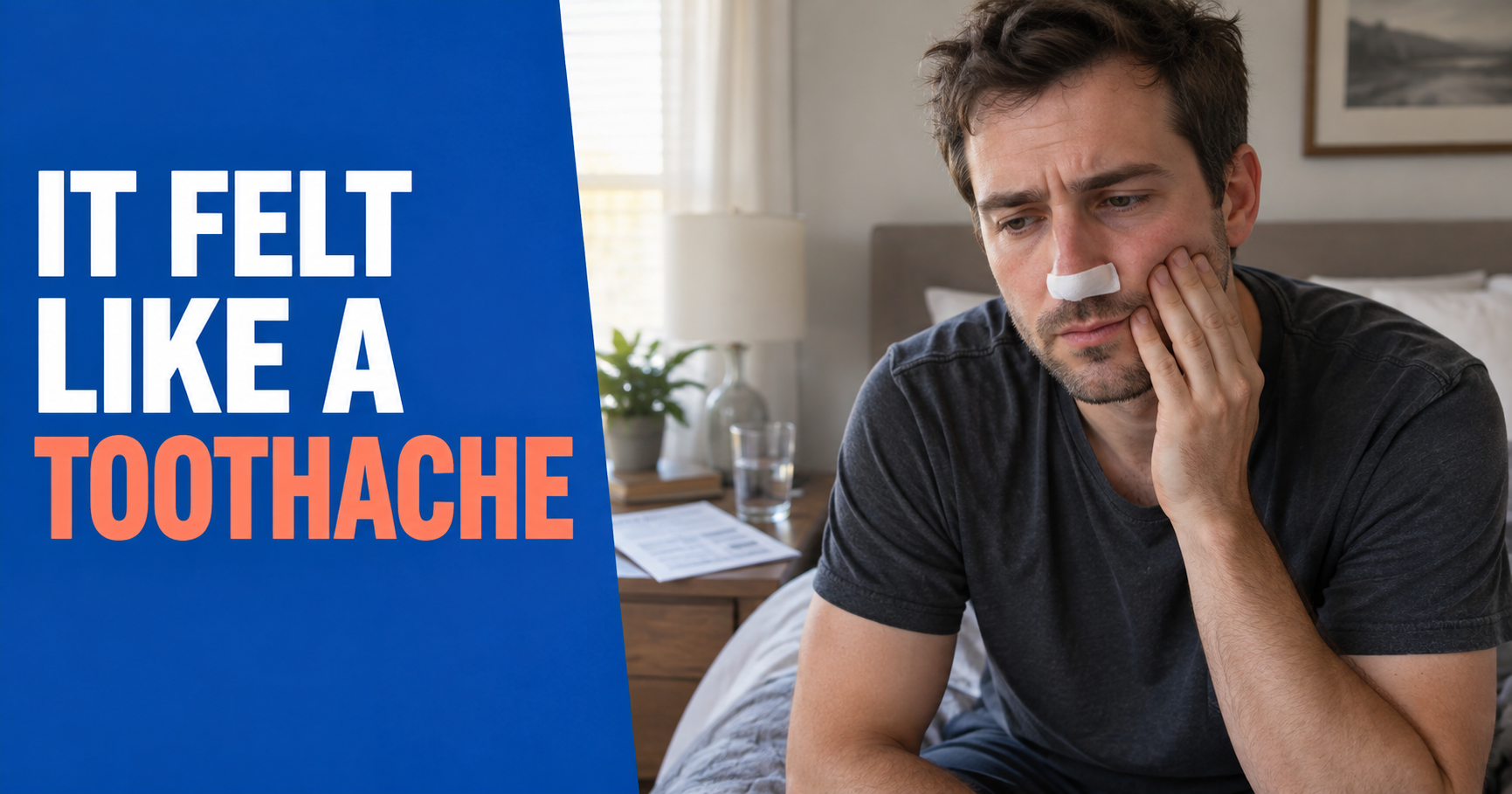
My teeth hurt after septoplasty because the whole area around my nose, upper gums, and front teeth was swollen, irritated, and healing at the same time. For me, it was not a normal toothache where one bad tooth hurts when you bite down. It was a deep, burning, throbbing pain behind my upper front teeth and through the roof of my mouth.
It honestly scared me. I expected a sore nose, congestion, dried blood, and trouble sleeping. I did not expect it to feel like someone had punched me in the mouth or lit up the roots of my front teeth.

My worst tooth pain hit during the roughest part of recovery, around days 3 through 5. Every time I tried to talk, chew, smile, or move my upper lip, the pain seemed to fire through that whole area. It slowly improved after the first week, but the area stayed tender much longer than I expected. Readers dealing with the same early recovery window may also relate to this explanation of nighttime pain during early septoplasty recovery.
If this is happening to you, it does not automatically mean you have a damaged tooth or that something went wrong. But you should still pay attention to the pattern of pain and know when it is time to call your surgeon.

The Kind of Tooth Pain I Had After Surgery
The pain I had was mostly behind my top front teeth. It also reached into my gums, upper lip, and the roof of my mouth. It felt deeper than surface soreness.
At different times, it felt like:
- Pressure behind my front teeth
- Burning under my nose and through my upper gumline
- A sharp electric feeling when I moved my mouth
- Throbbing that got worse when my face swelled
- Tenderness when I tried to chew or open my mouth wide
That matters because tooth pain after septoplasty can mean different things. A sore upper front tooth area, especially along with swelling, stitches, stents, and upper-lip pain, can feel very different from one isolated tooth that is sensitive to cold, hot food, or biting.
For me, it all felt connected. My nose, upper lip, gums, front teeth, and roof of my mouth were basically one angry, swollen mess.

Why Septoplasty Can Make Your Teeth Hurt
Your surgeon works inside the middle wall of your nose, but the front part of that area sits close to the upper lip, gums, and roots of the upper front teeth. Swelling and irritated tissue can send pain into places that do not seem like they should be related to your nose.
In my case, several things seemed to pile on at once.
Swelling Put Pressure on the Whole Area
My face got very swollen after surgery. My nose felt hard, tight, and much larger than normal. That pressure was not limited to the outside of my nose. I felt it under my nose, behind my upper lip, and into my teeth.
The more swollen I got, the worse the deep tooth pain seemed to become.
Internal Stents Made Everything More Uncomfortable
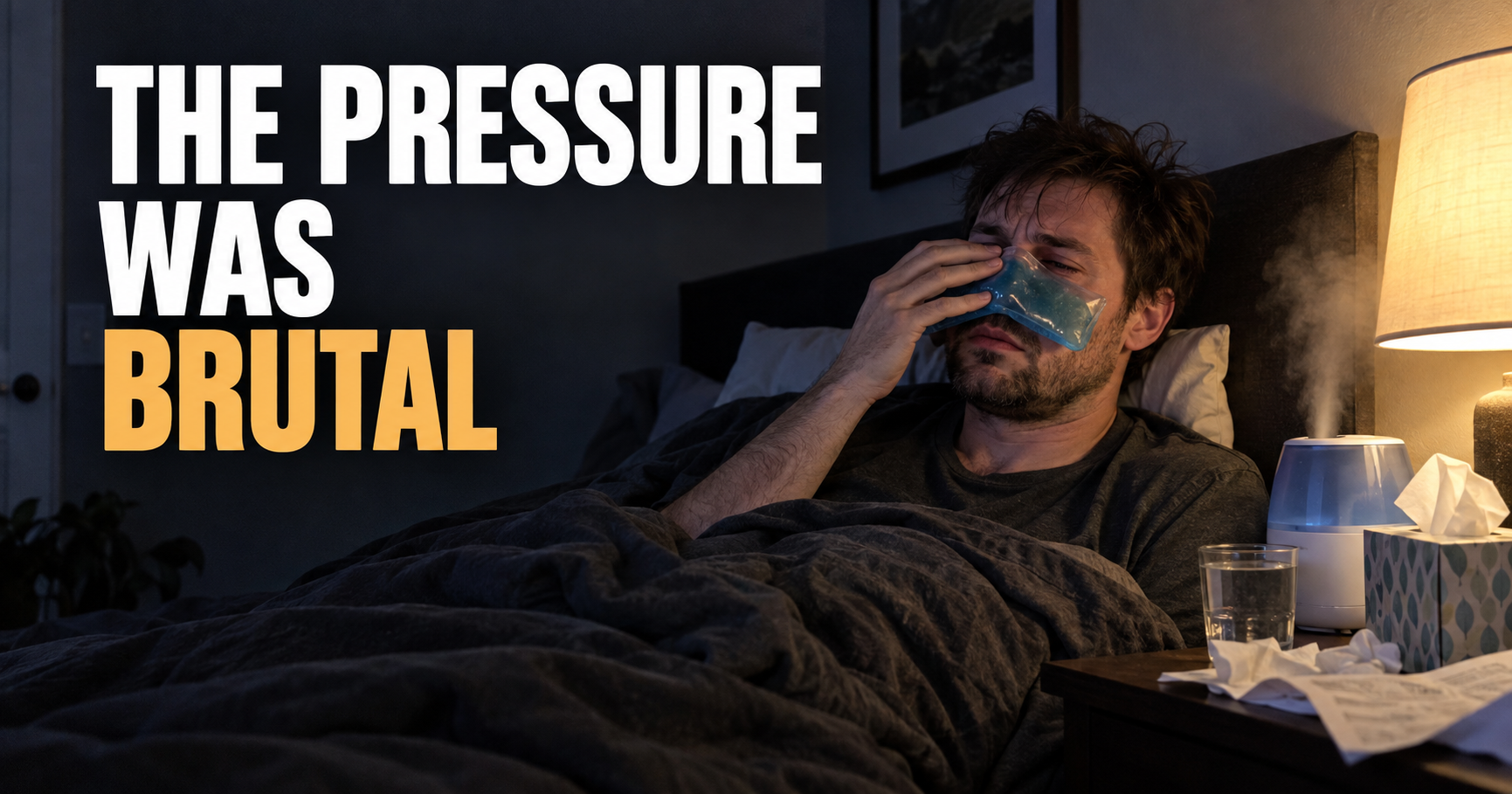
I woke up with stents in my nose, and they were one of the hardest parts of my recovery. They made the inside of my nose feel constantly crowded and irritated. Any little movement in my upper lip seemed to tug on the area and bring on more pain.
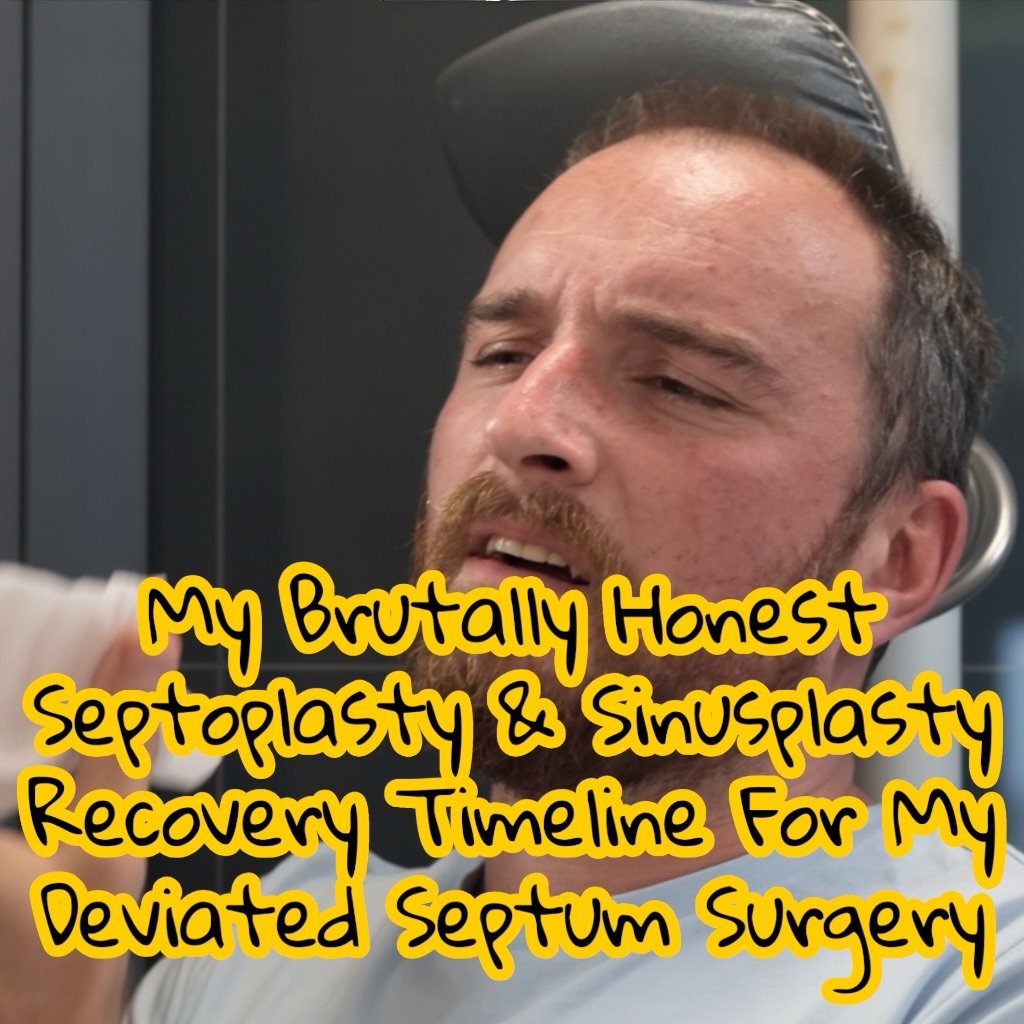
If you have stents or splints in, it can be hard to tell where the pain is really coming from because your entire mid-face can feel sore at once. My separate article on what internal septoplasty stents felt like for me explains just how much they affected those first several days.
Stitches and Healing Tissue Can Feel Like Nerve Pain
The stitches inside my nose burned and pulled, especially near the base of my nose. That pain did not stay put. It felt like it traveled into my upper lip and front teeth.
I am not saying every person with tooth pain after septoplasty has a nerve injury. In my case, it felt more like the healing tissue, swelling, stitches, and constant pressure had the whole area fired up.
Moving My Mouth Made It Flare Up
This was one of the strangest parts. Talking, chewing, yawning, and even trying to smile could make the pain jump.
I had a hard time eating because opening my mouth wide pulled on the area under my nose. Even soft food was annoying when my face was at its worst. That overlap between mouth movement and pain was a big clue that the problem was tied to surgery recovery, not just one random tooth.
When My Tooth Pain Was the Worst
My timeline was not easy, and I know every recovery is different. But this is how it went for me.
Day 1 and Day 2
At first, I was sore, numb, swollen, and foggy from surgery and medicine. I noticed discomfort around my upper lip and mouth, but I did not yet realize how bad it would get.
The surgical numbness had not completely worn off early on, so the pain felt more manageable.
Days 3 Through 5
This was the worst stretch for me.
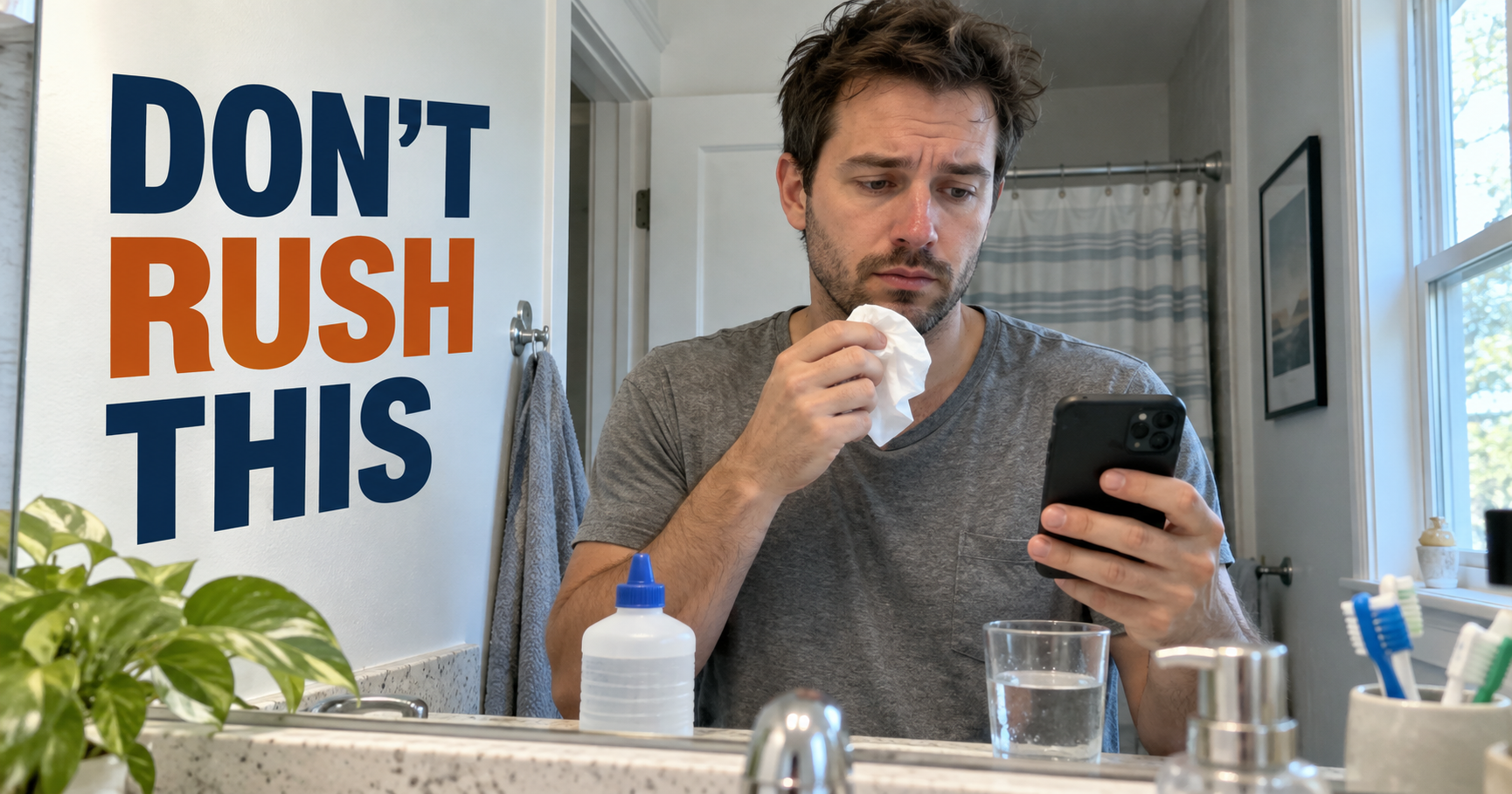
My nose was severely swollen and blocked. The stents hurt. My stitches burned. I could barely sleep. The pain behind my front teeth and through the roof of my mouth became one of the most miserable parts of the whole recovery. That same postoperative blockage is discussed in blocked nose after septoplasty, including why forcing the nose clear can be risky.
It was not just discomfort. It was deep, sharp, burning pain that made eating and talking hard. I had been through other painful things in life, and this specific kind of upper-mouth pain caught me completely off guard.
After the First Week
Once the stents came out, I started seeing some improvement. The tooth-area pain did not disappear instantly, but it stopped feeling quite as intense.
The worst pain lasted about a week for me. After that, it faded gradually. I still had tenderness and weird sensations in that area for a while, but by around week 3, it was mostly settling down.
If you want the full picture of what each stage felt like, my day-by-day septoplasty and sinusplasty recovery story has the honest version, including the swelling, sleepless nights, rinsing problems, and how bad the mouth pain got.
What Helped Me Get Through the Pain
Nothing made the pain magically disappear. I wish I could say there was one simple trick, but there was not. These were the things that gave me at least a little relief.
Ice on My Cheeks and Upper Face

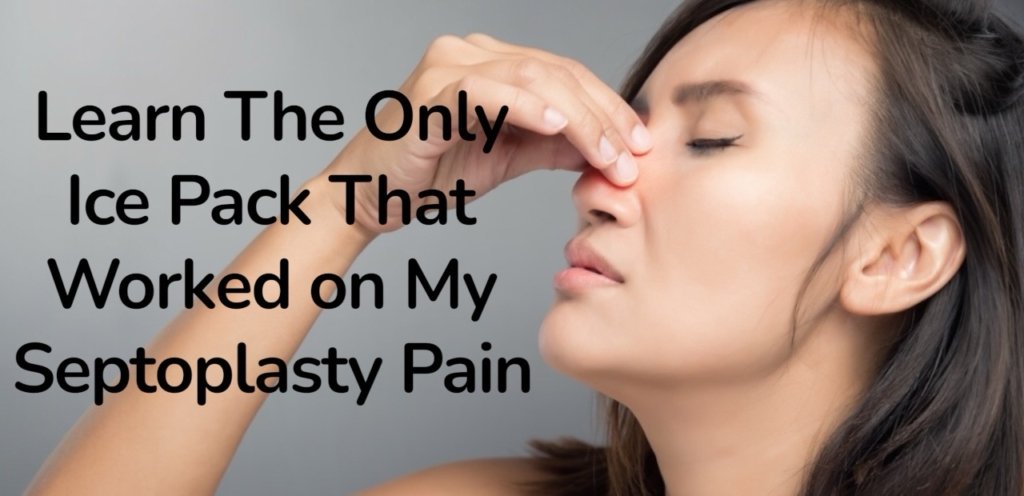
Carefully icing my cheeks and the area around my upper lip helped take the edge off the throbbing. I had to use it in short periods because too much cold started making my skin burn. A face ice pack for swelling may make short icing sessions easier during the early recovery period.
The goal was not to freeze my face. I was just trying to calm down the swelling and get a brief break from the pressure.
Keeping My Mouth and Lips From Getting Dried Out
Mouth breathing made my lips dry, cracked, and sore. That made every bit of talking or facial movement feel worse.
Lip balm and moist air did not fix the pain behind my teeth, but they helped reduce the extra pulling and irritation around my mouth.
Eating Soft Foods and Talking Less
I did not realize how much I move my upper lip and jaw in a normal day until everything hurt. Soft foods were easier, and keeping conversation short during the rough days helped more than forcing myself through it.
That is not a glamorous recovery tip, but it was real. Resting my face mattered.
Following My Surgeon’s Medication Instructions
Use only the pain-medicine plan your surgeon or doctor gave you. I needed help managing my pain, but I also learned that recovery medicine can leave you foggy, dehydrated, and constipated. Do not add, combine, or increase medications on your own just because you are desperate for relief.
How to Tell if It Might Be a Dental Problem Instead
Because this is a sinus-surgery site, I do not want to brush off every kind of tooth pain as normal recovery.
The pain I had was spread through the front upper tooth area and came with a lot of nasal swelling, upper-lip pain, stitches, and stents. If you have pain that feels very different from that, it is worth checking in with your surgeon or dentist.
Pay closer attention if:
- One tooth hurts much more than all the others
- You have a cracked tooth, loose tooth, or visible dental problem
- The pain is worse when you bite on one particular tooth
- Cold or hot food creates a sharp pain in one tooth
- You have facial swelling that keeps getting worse instead of better
- You have a fever, pus-like drainage, a bad smell, or other signs of infection
- Your numbness or tooth pain is not improving over time
You do not need to sit at home wondering if you are overreacting. Call your ENT office and explain exactly where it hurts, when it started, and whether the pain is getting better or worse.



When I Would Call the Surgeon
I would contact the surgeon if the pain suddenly became much worse after it had started improving, if it stayed severe beyond the early recovery period, or if it came with fever, increasing redness, worsening swelling, foul drainage, or a concern about infection.
I would also call if the pain was only in one tooth and felt more like a true dental emergency than a broad sore area from surgery.
The whole point is not to panic over every weird recovery symptom. It is to notice whether the overall direction is improving. Mine was brutal in the beginning, but it slowly moved in the right direction after that first miserable week.
This Was One of the Symptoms Nobody Prepared Me For
I expected my nose to hurt. I expected to be congested. I expected to look swollen and sleep badly.
I did not expect pain behind my front teeth to be one of the things I remembered most from recovery.
That is why I wanted to write this. If you are sitting there after septoplasty wondering why your teeth hurt so badly, you are not crazy for being worried. The connection between the nose, upper lip, gums, roof of the mouth, and front teeth is something I wish someone had explained to me before surgery.
My pain was intense, but it did slowly fade. Keep your surgeon in the loop, be gentle with your face, and give yourself more recovery time than those cheerful little surgery pamphlets make it sound like you will need.
I started Sinus Struggles because I wanted people to find the real details I could not find before my own surgery. The pain behind my teeth was one of the biggest surprises of recovery, and I hope knowing what I went through makes this part feel a little less scary while you heal.
About the Author: Daxon Weaver shares his firsthand experience with septoplasty and sinus surgery recovery on Sinus Struggles, including the uncomfortable details people are rarely warned about before surgery.