A saline rinse after septoplasty with stents was nothing like the simple, easy sinus rinse I had pictured before surgery. I expected some discomfort. What I got was a nose so swollen and blocked that the saline often felt like it was hitting a brick wall.
My surgeon wanted me to rinse, and I tried. But with internal stents, stitches, dried blood, swelling, and crusting all packed into the same small space, it did not always flow through the way people make it sound online. Sometimes it stung. Sometimes it backed up. Sometimes it ran right back out the same nostril. Sometimes it seemed like absolutely nothing happened except more pressure and frustration.
If that is what you are dealing with right now, you are not doing something wrong just because the rinse is not flowing perfectly. A fresh surgical nose with stents in it is not the same as a regular congested nose.
Your own surgeon’s instructions come first. This is my honest experience with rinsing while I had stents in, what made it feel so difficult, what I did not force, and when I would call the ENT instead of trying to make a rinse work.
Why Saline Rinses Can Feel Impossible With Stents In
A saline rinse is supposed to add moisture and help move out blood, mucus, and crusting while the nose heals. That sounds great in theory.
The problem is that stents take up room inside your nose at the exact time your nasal tissue is already swollen. For me, there was barely any open space left. I could feel the stents constantly, and I could not breathe through my nose normally.
Then add dried blood at the front of the nostrils and the irritation from internal stitches. It did not take much for a rinse to feel like it had nowhere to go.
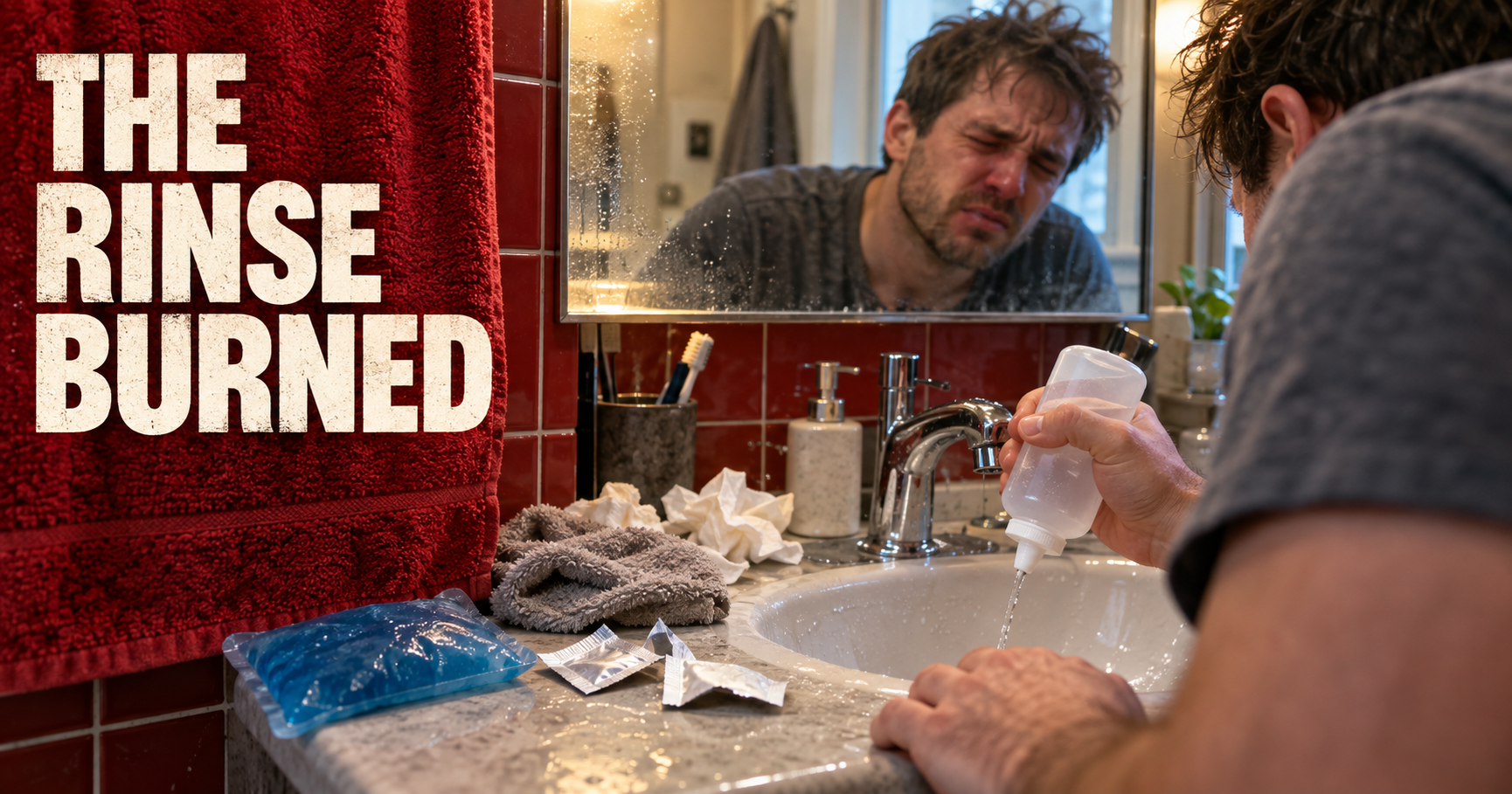
I was told to rinse often, but the more blocked I became, the harder it felt. I would aim the bottle, gently use it the way I had been shown, and wait for the saline to pass through. Instead, it could burn, spill out, or sit there and make me feel even more plugged up.
That was one of the most frustrating parts of my early recovery. I wanted the rinse to clear everything out, but my nose was simply too swollen and crowded for it to work like a normal rinse.


What My Rinses Felt Like During the First Week
At the beginning, the inside of my nose was raw and tender. I had stents, dissolvable stitches, swelling, and crusting. The saline did not feel soothing at first. It could sting badly.
The closest comparison I can make is trying to wash water through a clogged pipe without enough opening for the water to move. You can add more water, but that does not mean it is going to clear the blockage.
I had hoped the rinse would soften the dried blood and help me breathe better. Sometimes it added a little moisture, which was better than nothing. But it did not immediately wash through the stents or open my nose up.
The worst thing I could have done was turn frustration into force. I did not need to squeeze harder and harder just because the saline was not coming out the other side. The inside of my nose had just been operated on. More pressure was not automatically better.
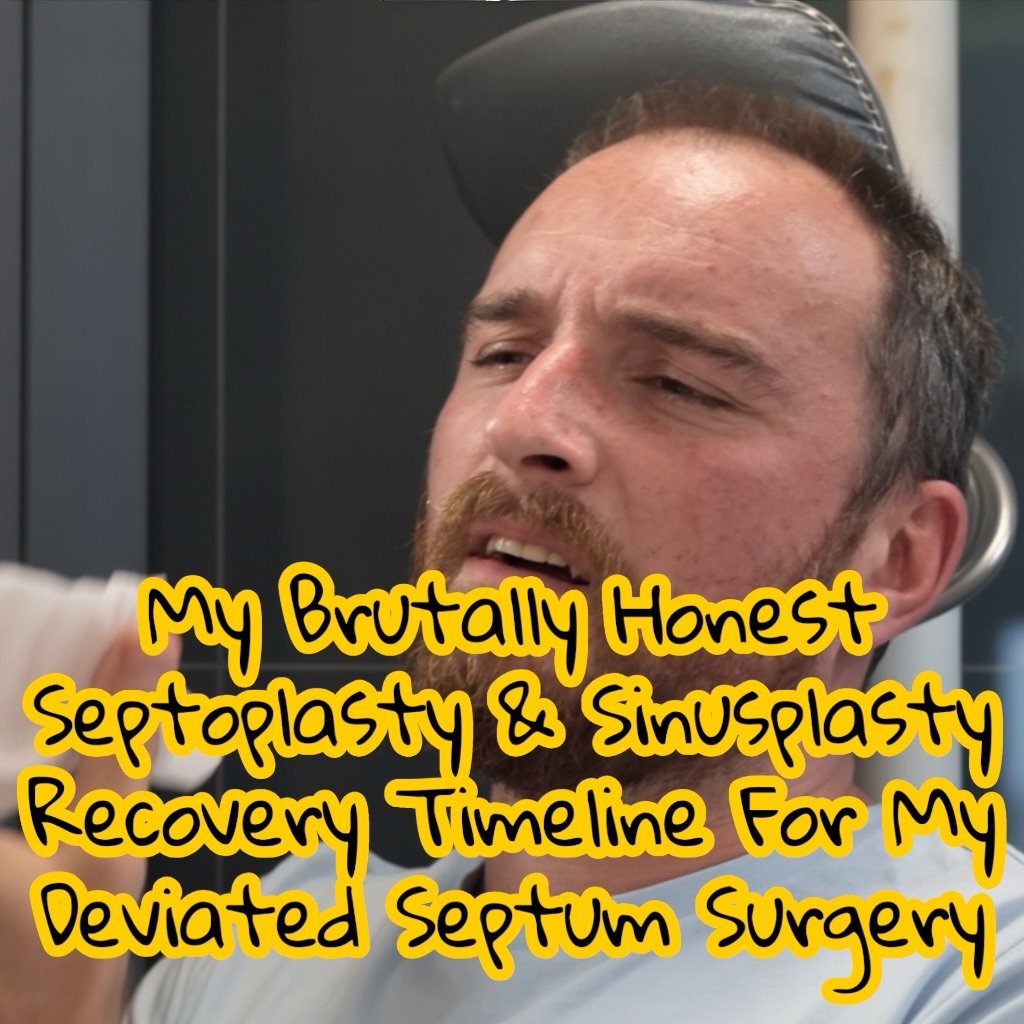
My full septoplasty recovery story shows how quickly that early swelling and dryness became miserable for me.
Stents Change the Whole Rinse Experience
Before surgery, I did not fully understand how much internal stents could affect basic things like rinsing and breathing.

They were not just a little annoying. Mine created constant pressure and made the inside of my nose feel crowded. I could feel them when I moved my upper lip, talked, yawned, or tried to eat. They also made it harder to tell what was swelling, what was crusting, and what was simply the stents taking up space. If that pressure also feels like it reaches the teeth or gums, upper-mouth pain after surgery offers a closer look at the sensation.
When I tried to rinse, I had to remember that the goal was not to make my nose feel completely open right away. The goal was to follow the healing plan my surgeon gave me without disturbing anything inside.
That mindset helped a little. I was still miserable, but I stopped expecting the rinse to perform a miracle while the stents were still in.
I wrote more about how brutal my nasal stents felt because I think people deserve to know that this can be one of the hardest parts of recovery.
Why the Saline May Not Flow Through Both Sides
There are several reasons a rinse may not come out the other nostril after surgery.
- Your nose may be badly swollen
- Internal stents or splints may be narrowing the space
- Dried blood and mucus may be blocking the front of the nostril
- Crusting may have built up around the surgical area
- The direction of your head may not be right for your surgeon’s recommended technique
- Your surgeon may have given you instructions that differ from a standard sinus-rinse routine
The most important thing is not to assume you need to force it through. A rinse that does not immediately travel from one side to the other is not proof that you failed or that surgery failed.
It may just mean you are still early in healing.


What I Did Not Do When the Rinse Would Not Work
I did not keep squeezing harder until my face hurt.
I did not blow my nose afterward to try to push everything out.
I did not stick anything deep inside my nostrils to pull out whatever was blocking the saline.
I did not pull on anything that looked like a stitch, dried blood, or part of the stent.
Those things are tempting when you are uncomfortable and desperate to breathe. I understand the urge. But a fresh surgical nose is not something to attack with force.
My nose had enough going on already. I was dealing with dried blood stuck around nose hairs, burning tissue, and pressure from the stents. The last thing I wanted was to create bleeding or make the swelling worse.
What Helped Me Manage the Dryness
The rinse was only one part of the battle. Even when it did not flow well, I still had to deal with the dryness caused by mouth breathing.

I used the moisture plan my surgeon gave me and kept the air from getting too dry. A humidifier did not open my nose or remove the stents, but it helped my mouth and lips feel less miserable after breathing through my mouth around the clock. A small smart humidifier may be worth considering if dry air is making mouth breathing more uncomfortable, alongside the plan from your surgeon.
I also tried to stay patient with the crusting near the front of my nose. That was difficult because it could feel like a hard plug that I needed to remove immediately. But I had to be careful. Some of that dried material was close to sore tissue, stitches, and areas that were still healing.

My article on handling dried blood without making things worse explains why I learned not to rush that part.
The Difference Between a Rinse and Cleaning Your Nose
This is where I think people can get mixed up.
A saline rinse is about following your surgeon’s instructions to add moisture and flush the nose during healing. It is not an excuse to aggressively clean out everything you can see.
Cleaning around the outside of your nostrils is different from trying to dig deep inside. A soft crust near the entrance of the nose may be one thing. A hard piece of dried blood attached near stitches or a stent is another.
I had to accept that some of the blockage would not be solved by me at home. My ENT had the tools, the view, and the experience to handle the things I should not be messing with myself.
When the Rinse Started Feeling Less Impossible
For me, the big turning point was when my stents came out on day 7.
I was still swollen afterward. I was still healing. I did not suddenly have perfect airflow or a completely clean nose. But removing the stents took away some of the constant pressure and created more room inside my nose.
That made a difference mentally too. Before that appointment, it felt like I was trapped in the same miserable stage with no end in sight. Afterward, I could finally tell that recovery was moving forward, even if it was still slow.

If your stents are still in, try not to judge your eventual breathing by how your nose feels today. The early stage can be rough, especially if you had septoplasty plus other sinus work. This broader account explains why breathing stays blocked after surgery during the early healing period.



When I Would Call the ENT About a Saline Rinse
I would call the surgeon’s office if I was unsure how to rinse with stents or splints. That is a normal recovery question, and the staff can tell you what applies to your specific surgery.
I would also call if:
- The rinse causes severe pain that feels different from normal soreness
- I have heavy bleeding or bleeding that does not slow down
- I develop fever, worsening redness, pus-like drainage, or a foul smell
- I think a stent or splint has shifted
- I accidentally use too much force and then develop new pain or bleeding
- I cannot tell whether I am supposed to use a mist, a squeeze bottle, or another method
- I am worried that a hard blockage is attached to stitches or healing tissue
Do not sit there wondering whether you should push harder. I would rather call the ENT and feel silly for five minutes than create a bigger problem because I tried to be my own surgeon.
A Rinse Not Flowing Does Not Mean Recovery Is Going Wrong
That is the part I wish I had understood sooner.
A saline rinse after septoplasty with stents can be painful, messy, and frustrating. It may not flow the way you expected. It may feel like it does very little while your nose is swollen shut.
That does not automatically mean something is wrong.
For me, the early days were about getting through each one without adding more pressure, more bleeding, or more irritation. I followed my instructions, used moisture where I could, stayed careful with crusting, and waited for the stents to come out.
If you are in that same rough stage, keep your surgeon involved and give yourself credit. This part is uncomfortable, but it is temporary.
About the Author: Dax Weaver shares his firsthand experience with septoplasty and sinus-surgery recovery on Sinus Struggles, including the uncomfortable details people are rarely warned about before surgery.