Chronic sinusitis isn’t just a bad cold that won’t quit. Here’s why it keeps happening, why your tests come back normal, and what actually makes a real difference.
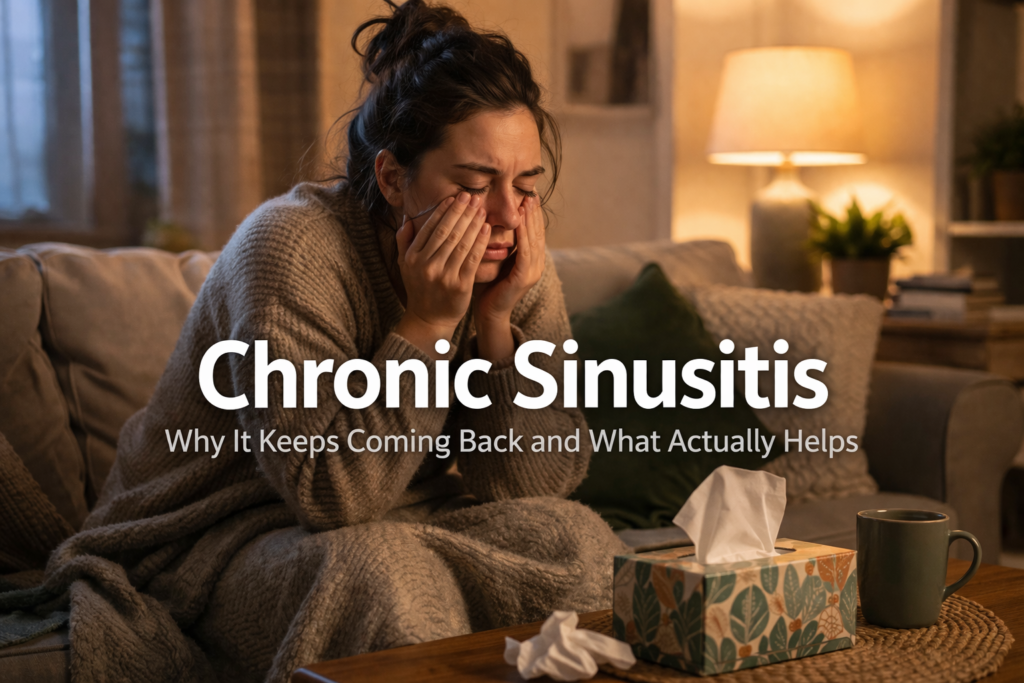
You’ve had this before. That heavy, pressurized feeling behind your cheeks and forehead. The nose that’s either completely blocked or running nonstop. The throat that needs constant clearing. The exhaustion that doesn’t match how much you slept.
And the part that makes it so maddening: it never fully goes away. You get a few good days, maybe even a good week, and then it comes back. Same pressure, same congestion, same foggy head. You start to wonder if this is just what the rest of your life feels like.
That’s chronic sinusitis. And if you’re in it right now, you deserve a real explanation — not just a prescription for another round of antibiotics and a pat on the back.

What Chronic Sinusitis Actually Is (And What It Isn’t)
Chronic sinusitis is defined medically as inflammation of the sinuses that lasts 12 weeks or longer, even with treatment. That’s the textbook definition. What the textbook doesn’t tell you is how wildly different it can look from person to person — and how easy it is to spend months chasing the wrong cause.
It’s not the same as getting a sinus infection. Acute sinusitis — the kind you get after a bad cold — hits hard, hurts a lot, and usually clears up within a few weeks with the right treatment. Chronic sinusitis is a different beast. It’s lower-grade but persistent. It’s the kind of thing that makes you feel like you have a cold every single day that just won’t go away — because functionally, that’s almost exactly what’s happening to your body.
It’s also not always obvious on a scan. One of the most frustrating experiences people with chronic sinusitis describe is going through a CT scan, being told everything looks normal, and then walking out still feeling terrible with zero answers. There’s a real reason why your sinus CT scan can come back normal while you still feel constant pressure — and it has everything to do with what those scans actually measure versus what they miss.
The Symptoms People Describe — And the Ones They Can’t Find Words For
The obvious symptoms are easy to name. Blocked nose. Facial pressure. Thick or discolored mucus. Reduced sense of smell. Headache that sits behind the eyes or across the forehead. Post-nasal drip that makes you cough and clear your throat constantly, especially at night.
But chronic sinusitis also produces a cluster of symptoms that are harder to explain and easier to dismiss — both by doctors and by the people living with them.
There’s the constant low-grade fatigue that doesn’t respond to more sleep. The brain fog that makes concentration feel like work. The vague sense of just feeling “off” that’s difficult to articulate when someone asks how you’re doing. And then there are the ear symptoms — that persistent clicking, the feeling that your ears need to pop but won’t, the occasional dizziness that isn’t quite vertigo but isn’t nothing either.
These symptoms come from the same root cause. The sinuses and the ears share a direct connection through the Eustachian tubes, and when your sinuses are chronically inflamed, that inflammation disrupts the pressure balance in your ears. It’s why your ears constantly click but never feel open, and it’s why some people with chronic sinusitis also deal with a kind of dizziness that isn’t spinning but definitely isn’t right. The whole system is connected, and when one part is chronically inflamed, you feel it across the board.
Why Does Chronic Sinusitis Keep Coming Back?
This is the question most people actually want answered, and it’s the one that gets the least useful response in a standard doctor’s appointment. The honest answer is that chronic sinusitis almost always has multiple contributing factors working together, and treating only one of them is why it keeps coming back.
The Most Common Underlying Causes
Untreated or undertreated allergies are probably the single biggest driver of chronic sinusitis that goes unresolved. When your immune system is reacting to allergens — dust mites, pet dander, mold, pollen — it produces inflammation throughout your nasal passages and sinuses as a baseline. That inflammation is the environment in which chronic sinusitis thrives. You can treat the sinusitis, but if the allergies are still firing underneath, the inflammation never fully resolves and the cycle starts again. Many people with chronic sinusitis don’t even know they have significant allergies because the symptoms blend together.
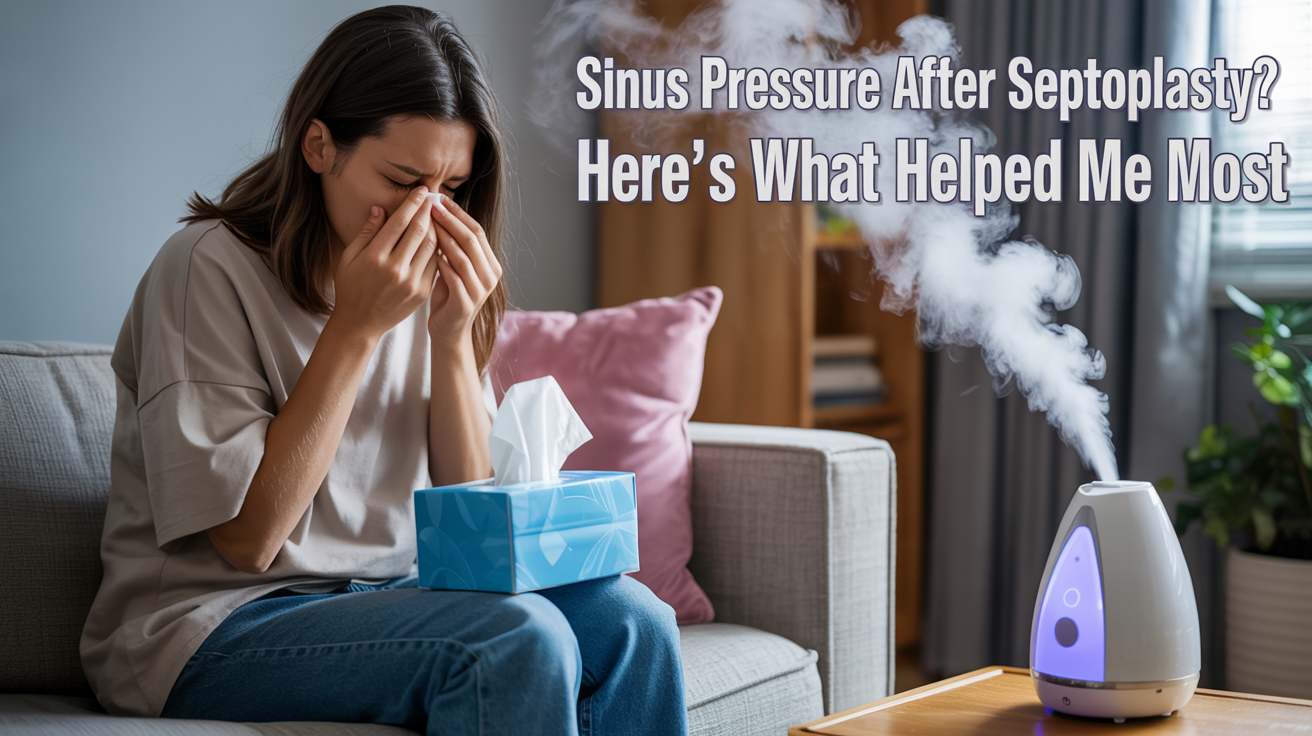
Structural issues can make everything worse, even when they’re not the direct cause. A deviated septum — where the cartilage dividing your nose is shifted to one side — doesn’t cause sinusitis, but it restricts airflow and drainage in a way that creates the perfect conditions for chronic inflammation to set in and stay. If you’ve been through septoplasty to correct a deviated septum, you know that surgery addresses the structural problem, but it doesn’t automatically eliminate the inflammatory patterns that built up around it — those take time and active management.
Environmental triggers in your home are something most people underestimate. The air quality inside your house has a direct, daily effect on your sinuses. Dust, mold spores, pet dander, and volatile compounds from carpets, furniture, and cleaning products all act as low-level irritants that keep your nasal lining in a constant state of mild inflammation. You don’t have to be clinically allergic to something for it to bother your sinuses — irritants and allergens are different mechanisms, and both matter.
Dry air is underrated as a chronic sinusitis trigger. Your nasal passages need moisture to function properly — the cilia that sweep mucus and debris out of your sinuses work best in a specific humidity range. When the air is too dry, the mucus thickens, the cilia slow down, drainage backs up, and inflammation follows. This is especially relevant in winter when heating systems strip moisture from indoor air, and it’s one of the reasons chronic sinusitis flares predictably with the seasons for so many people.
Nasal polyps are a factor for a meaningful subset of people with chronic sinusitis, particularly those who have had it for years without real improvement. These are soft, non-cancerous growths that form in the nasal passages or sinuses when inflammation has been present long enough. They’re painless on their own but they block drainage and airflow significantly, which makes everything else worse.
A previous infection that didn’t fully clear can leave behind residual inflammation that settles in as chronic. This is more common than most people realize. You had a nasty sinus infection, you took a course of antibiotics, it got better but never totally resolved, and six months later you’re still not quite right. The acute infection is gone, but the inflammatory response it triggered never fully switched off.


Why Antibiotics Keep Getting Prescribed (And Why They Often Don’t Help)
If you’ve had chronic sinusitis for a while, you’ve probably been prescribed antibiotics more than once. Maybe they helped initially. Maybe they helped a little each time but the sinusitis came back anyway. Or maybe they stopped helping at all.
Here’s why: antibiotics treat bacterial infections. But chronic sinusitis is primarily an inflammatory condition — and in many cases, bacteria aren’t the main driver. Research over the past two decades has increasingly shown that chronic sinusitis involves a complex immune response and inflammation cycle, not simply a bacterial infection that needs to be cleared. Giving antibiotics for chronic sinusitis that isn’t driven by active bacterial infection doesn’t address the underlying problem and may contribute to antibiotic resistance over time.
This doesn’t mean antibiotics are never appropriate — an acute flare on top of existing chronic sinusitis, particularly with fever and rapidly worsening symptoms, can absolutely involve bacterial infection that needs treatment. But antibiotic after antibiotic as the primary management strategy for chronic sinusitis is not the solution, and if that’s the only approach you’ve been offered, it’s worth having a deeper conversation with your doctor about what else might be going on.
What the Research Actually Says About Effective Treatment
The treatment landscape for chronic sinusitis has changed significantly over the past decade, and the evidence now points toward a combination approach that addresses both the inflammation and the environmental and structural factors that feed it.
Nasal Saline Irrigation — The Most Consistently Supported Intervention
If there’s one thing across the chronic sinusitis literature that consistently shows benefit with minimal risk, it’s nasal saline irrigation done properly and regularly. Rinsing the nasal passages with a saline solution physically removes allergens, irritants, thick mucus, and debris, reduces swelling in the nasal lining, and improves the function of the cilia that keep your sinuses draining.
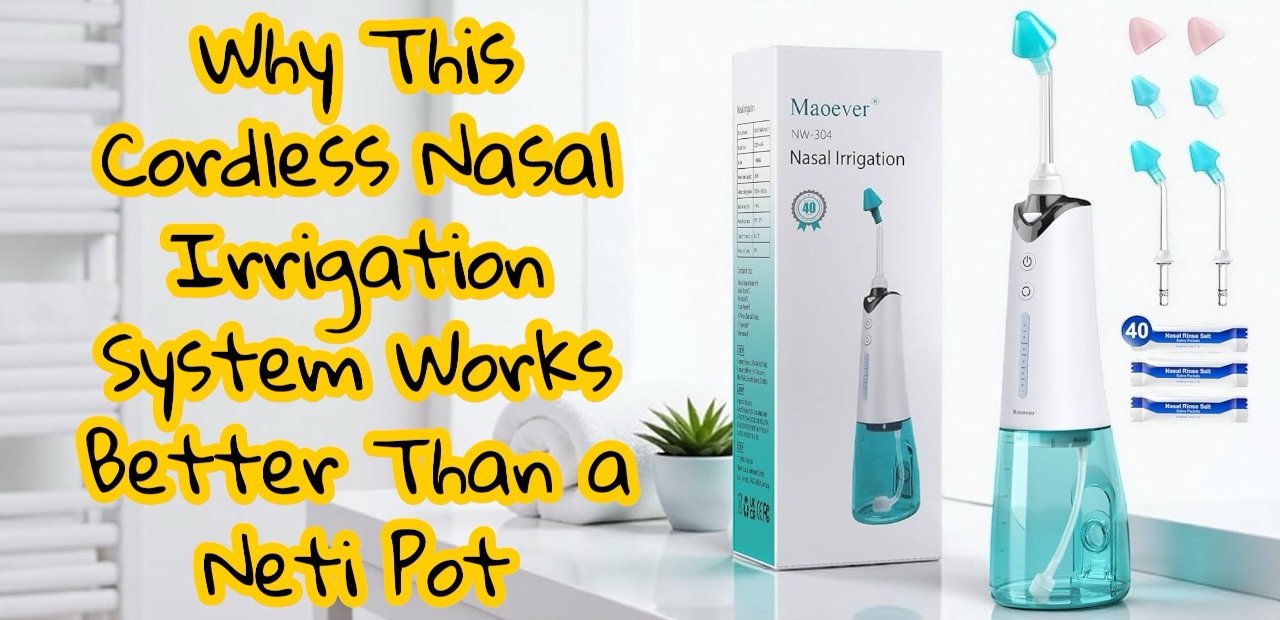
The key word is “properly.” A gentle squeeze bottle or a basic neti pot can work, but for anyone dealing with chronic sinusitis, an electric sinus rinse machine with adjustable pressure is a genuinely different experience — more thorough, easier to control, and far less likely to be uncomfortable enough that you stop doing it. If you want to understand why the electric option makes such a practical difference, this breakdown of the best electric sinus rinse machines covers it in honest detail, and the comparison between a cordless irrigation system and a neti pot is worth reading if you’re still on the fence.
Frequency matters too. Once a day during a flare, once every few days as maintenance — the people who see the most benefit from irrigation are the ones who make it a consistent habit rather than something they do when they feel bad and stop when they feel better.
Addressing Indoor Air Quality
This is where a lot of people get real, sustained improvement — often more than they expected. Your home environment is where you spend most of your time, and if that environment is chronically exposing your sinuses to dust mites, pet dander, mold, or dry air, you’re fighting against yourself every single day regardless of whatever treatment you’re using.
An air purifier with a true HEPA filter in your bedroom is one of the higher-impact changes you can make. Your bedroom is where you spend 7 to 9 hours every night breathing whatever is in that air, and reducing the allergen and irritant load in that space specifically gives your sinuses a period of real rest every day. A quality HEPA air purifier genuinely changes what’s in the air you’re breathing, and if you want to understand what’s actually triggering your sinuses before buying anything, an indoor air quality monitor can show you exactly what’s in your air in real time — which is often eye-opening.
Bedding matters more than most people realize. Dust mites live in mattresses and pillows and are one of the most common allergen triggers for chronic sinus sufferers. Mattress and pillow covers that create a physical barrier between you and the dust mite population in your bedding — like the SureGuard encasements covered here — are a simple, one-time change that reduces your nightly allergen exposure significantly.
And if you live in a humid climate or deal with a damp basement, excess moisture is a mold and dust mite factory. A dehumidifier that keeps your home in the 45 to 50 percent relative humidity range removes that fuel source, and the difference it makes for people with chronic sinusitis who are also sensitive to mold is often dramatic. The hidden connection between household humidity and chronic sinus problems is one of the most overlooked pieces of this puzzle.
Humidity and Your Nasal Passages
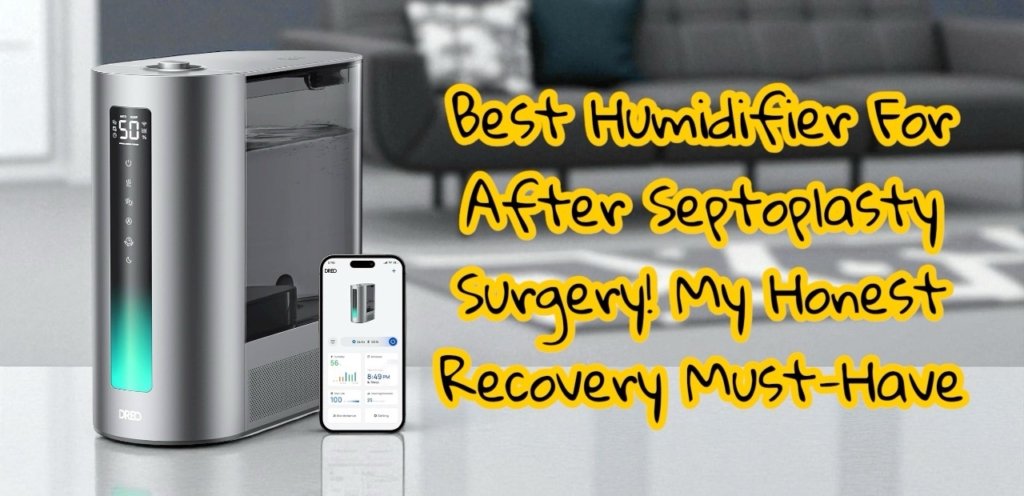
On the other end of the spectrum — if the air in your home is too dry rather than too humid — adding moisture back is equally important. A good humidifier running in your bedroom keeps your nasal passages moist enough for the cilia to do their job, makes it easier for thick mucus to drain, and noticeably reduces that raw, irritated feeling in your nose and throat. If you’re not sure what to look for, this honest review of a smart humidifier covers what actually matters in the specs.
Topical Nasal Steroids
Prescription and over-the-counter nasal steroid sprays — like fluticasone or mometasone — are the most evidence-backed pharmaceutical treatment for chronic sinusitis when it’s driven by inflammation rather than infection. They work locally in the nasal passages to reduce the swelling that’s blocking drainage, and unlike oral steroids, they don’t carry significant systemic side effects when used as directed. The catch is that they work slowly — you need to use them consistently for two to four weeks before you see meaningful benefit, and a lot of people quit before then because they don’t notice an immediate change.
When Steam and Inhalation Help
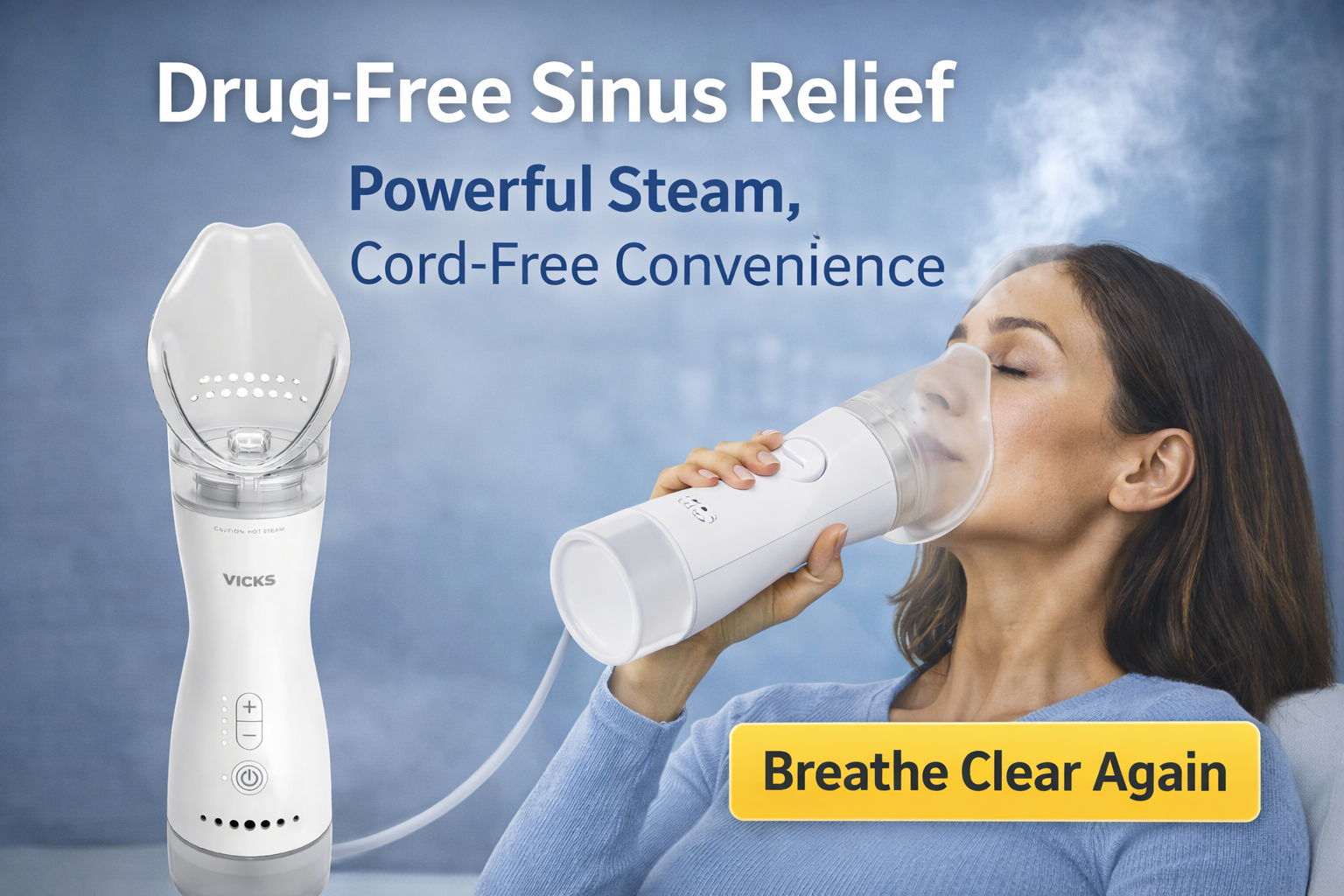
Steam inhalation has been used for sinus relief for a long time, and while it’s not a treatment in the clinical sense, it does provide real symptomatic relief — loosening thick mucus, reducing that tight pressurized feeling, and opening the passages enough to make drainage easier. A portable steam inhaler is a more controlled version of the old bowl-of-hot-water approach, and if you’ve ever noticed your sinuses instantly feeling better in a hot shower, you already understand why it works. The Vicks portable steam inhaler review is worth a read if you want a practical option. Similarly, eucalyptus and peppermint shower steamers are an easy way to turn your daily shower into a passive sinus relief session.
Hydration: The One Thing Almost Everyone With Chronic Sinusitis Is Underdoing
This sounds almost too simple to be worth mentioning, but it’s genuinely one of the most impactful things you can change. When you’re dehydrated — even mildly — the mucus in your sinuses gets thicker and stickier. Thicker mucus drains poorly. Poorly draining mucus creates a breeding ground for bacteria and a constant sense of pressure and fullness. Staying well hydrated keeps mucus thinner and more mobile, which makes drainage easier and inflammation less severe.
Most people with chronic sinusitis are chronically mildly dehydrated without knowing it. The headaches and fatigue they attribute entirely to their sinuses are sometimes partly dehydration. The connection between hydration and sinus health is more direct than most people realize, and it’s one of the cheapest interventions available.

Chronic Sinusitis and Sleep: Why It Gets Worse at Night
If you’ve noticed your sinusitis symptoms are reliably worse at night and first thing in the morning, there are a few reasons why, and understanding them points toward practical fixes.
When you lie flat, gravity stops helping your sinuses drain. Mucus that would have been draining throughout the day pools in your sinus cavities and nasal passages, creating more pressure and more congestion. Sleeping with your head slightly elevated — even just an extra pillow — helps drainage continue through the night.
The air in your bedroom at night, as mentioned above, matters enormously. If you’re sleeping in air that’s dry, or dusty, or loaded with allergens from your bedding, you’re spending the entire night with your sinuses under assault. Running a humidifier and using allergen-barrier bedding addresses the two biggest nighttime sinus triggers simultaneously.
Nasal congestion at night also disrupts sleep quality in ways that compound the fatigue and brain fog that chronic sinusitis already causes. Nasal strips that gently open the nasal passages can help with nighttime breathing — a simple option for breathing better instantly without medication.
When Should You See a Specialist?
If you’ve been managing chronic sinusitis with your primary care doctor and getting limited results, it may be time to see an ENT — an ear, nose, and throat specialist — or an allergist.
An ENT can assess whether structural factors like a deviated septum or nasal polyps are playing a role and discuss whether any procedural intervention makes sense for your situation. An allergist can do proper testing to identify what you’re actually reacting to — which often reveals allergies that weren’t suspected and opens up treatment options like immunotherapy that address the root immune response rather than just the symptoms.
You should make an appointment sooner rather than later if you’re experiencing any of the following: symptoms that have lasted more than three months without meaningful improvement, facial pain or pressure that is severe or getting worse, repeated episodes of acute infection on top of your baseline chronic symptoms, significantly reduced or lost sense of smell, or symptoms that are disrupting your sleep or daily functioning on a regular basis.
If You’ve Had Sinus Surgery and Still Have Chronic Symptoms
Surgery — whether that’s septoplasty, functional endoscopic sinus surgery (FESS), or sinuplasty — removes the structural barriers to drainage and healing, but it doesn’t automatically eliminate the inflammatory patterns or environmental triggers that contributed to the problem in the first place.
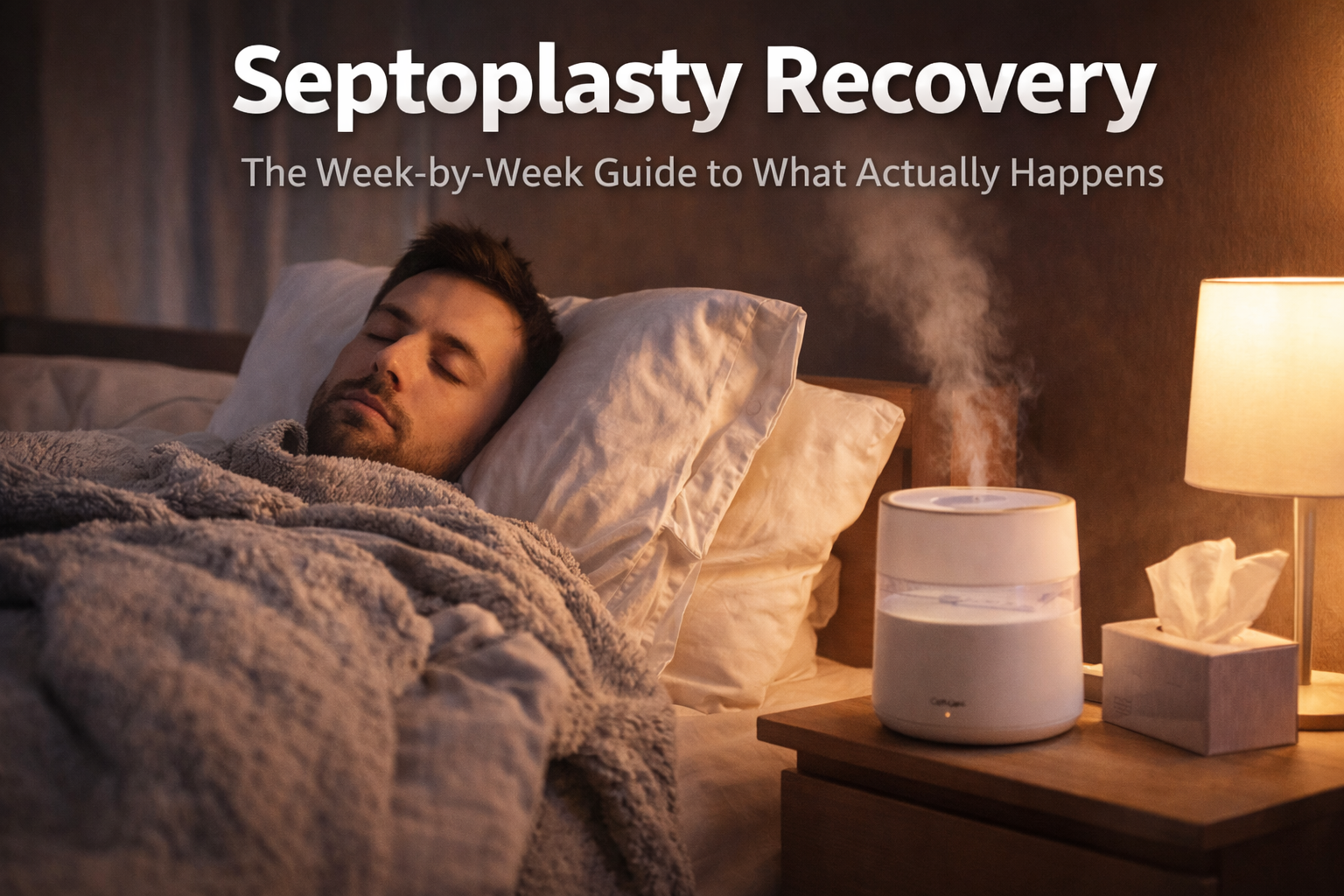
A lot of people are surprised to find that post-surgery sinus management is still genuinely important. Regular irrigation, nasal steroids if prescribed, attention to air quality and humidity, and follow-up appointments aren’t optional extras — they’re what protects the results of the surgery and prevents the cycle from restarting. If you had septoplasty and want a detailed understanding of what recovery and ongoing sinus management looks like, the complete week-by-week septoplasty recovery guide covers the whole picture from surgery day through full healing.

A Realistic Picture of Managing Chronic Sinusitis Long-Term
Here’s the honest version of what long-term management looks like — the version that’s actually helpful rather than reassuring but useless.
For most people, chronic sinusitis doesn’t get resolved with a single intervention. It gets managed, and then it gets better. The difference between people who find their way to a better quality of life and people who stay stuck is usually the difference between treating one thing at a time reactively versus building a consistent set of habits and environmental changes that address multiple contributing factors simultaneously.
That means regular nasal irrigation even when you feel okay. It means keeping your bedroom air clean and at the right humidity. It means knowing your triggers and reducing your exposure to them as much as practically possible. It means taking nasal steroid sprays consistently if they’ve been prescribed, not just during flares. It means staying hydrated. None of these things is dramatic. Combined and maintained, they genuinely change the baseline.
There will still be bad weeks. There will still be flares, especially during high-allergen seasons or after a viral illness. But the frequency and severity of those flares decreases when the underlying inflammatory burden is lower, and that’s a meaningful improvement in daily life even if it doesn’t look like a cure.


Frequently Asked Questions About Chronic Sinusitis
How do I know if I have chronic sinusitis or just frequent colds?
The main distinction is duration and pattern. Colds are caused by viruses and typically resolve within 10 to 14 days. Chronic sinusitis is a persistent inflammatory state that lasts 12 weeks or longer, doesn’t fully clear between episodes, and often isn’t accompanied by the acute fever and body aches of a viral illness. If you feel like you permanently have a cold that never fully clears, that pattern itself is the signal to talk to a doctor about chronic sinusitis rather than treating each episode as a separate acute illness.
Can chronic sinusitis go away on its own?
In some cases, yes — particularly if the underlying trigger is something that resolves or changes, like a seasonal allergen period ending or a change in living environment. But for most people with true chronic sinusitis that’s been going on for months, meaningful and lasting improvement requires active management rather than waiting it out.
Is chronic sinusitis the same as allergic rhinitis?
They’re related but not the same thing. Allergic rhinitis is an immune reaction to allergens that causes inflammation in the nasal passages. Chronic sinusitis is inflammation that extends into the sinus cavities themselves and persists beyond 12 weeks. The two frequently co-exist and feed each other — untreated allergic rhinitis is one of the most common causes of chronic sinusitis — but they’re different conditions with overlapping treatment.
Why does my chronic sinusitis keep flaring up even when I’m doing everything right?
Usually this points to one of a few things: an allergen or irritant trigger that hasn’t been identified or fully addressed, a structural factor like nasal polyps that’s limiting drainage, or an inflammatory pattern that’s been established for long enough that it needs more consistent and sustained intervention to change. An allergist or ENT is the right resource when conservative management isn’t giving you the results you’d expect.
Does diet affect chronic sinusitis?
For some people, yes. Dairy is the most commonly cited culprit — some people find it noticeably increases mucus production and congestion, while others see no effect at all. Alcohol, particularly red wine and beer, is a vasodilator that causes nasal passages to swell in some people. Spicy food can temporarily open passages for some people. The honest answer is that dietary effects are highly individual, and if you suspect food is a factor, an elimination approach with careful observation is the only real way to know.
Can stress make chronic sinusitis worse?
Yes, and this is backed by the physiology. Chronic stress elevates cortisol and triggers inflammatory pathways that can worsen inflammatory conditions throughout the body, sinusitis included. It also tends to worsen sleep, reduce immune function, and trigger habits like mouth breathing that dry out nasal passages. This doesn’t mean chronic sinusitis is psychosomatic — the inflammation is real and physical — but stress management is a legitimate part of the overall picture for many people.
Final Thoughts
Chronic sinusitis is one of those conditions that medicine is sometimes too quick to treat as a simple problem with a simple solution, when the reality is that it’s a complex, multi-factor condition that requires a layered approach. If you’ve been bounced between antibiotics and told to come back when it gets worse, that experience is frustrating and unfortunately common.
But real improvement is possible. The people who find their way to it tend to be the ones who stop waiting for a single fix and start building the combination of habits, environmental changes, and appropriate medical treatment that addresses the full picture. It takes more effort upfront. It pays off in fewer bad days, better sleep, clearer thinking, and a quality of life that stops being shaped around how awful your sinuses feel.
Start with what you can control today — the air in your bedroom, your hydration, a consistent rinse routine — and build from there. It’s not glamorous advice. It’s just what actually works.
As an Amazon Associate we earn from qualifying purchases through some links in our articles.