That constant drip down the back of your throat that never fully clears — here’s exactly why it keeps happening and what actually addresses the cause instead of just the feeling.

That constant feeling of something dripping down the back of your throat. The clearing. The swallowing. The cough that starts the second you lie down at night.
If you have been dealing with post nasal drip for more than a few days, you already know it is one of the most persistently miserable things your body can do. And if you have been dealing with it for weeks or months, you are probably wondering why nothing you try actually makes it stop.
Here is the honest answer: most people treat the sensation and ignore the cause. That is exactly why it keeps coming back. This article walks you through what is actually happening, why some people never shake it, and what approaches genuinely work on the root of the problem.
What Post Nasal Drip Actually Is
Your sinuses and nasal passages produce mucus constantly. That is normal. Under healthy conditions your body makes about a quart of mucus per day, and most of it drains quietly down the back of your throat without you ever noticing it.
It is only when something disrupts the quantity, the consistency, or the drainage pathways that you start to feel it.
Post nasal drip is what happens when excess mucus accumulates at the back of the nasal passages and drips into the throat in a way you can feel. The excess can come from three places:
- Your sinuses producing too much mucus
- Mucus that has thickened and is moving too slowly
- Drainage pathways that are swollen or blocked
Often it is all three happening at once, which is part of why it can be so stubborn.
Why It Feels Worse Than It Sounds
The sensation of post nasal drip is genuinely hard to convey to someone who has never experienced it. There is the constant awareness of something sitting at the back of your throat. The reflex to clear it that never fully satisfies because more drainage follows immediately.
Then there is the cough that starts the moment you lie down. The hoarse voice every morning. The chronic mild sore throat that antibiotics do nothing for because it is irritation, not infection.
For people living with this long term, there is also a fatigue factor that rarely gets mentioned. The constant low-grade awareness of the sensation. The disrupted sleep from coughing at night. The social awkwardness of clearing your throat constantly in meetings or conversations. It adds up in a way that a symptom list does not capture.


The Most Common Causes — And Why This Matters So Much
Getting to the right cause is everything here. The causes have genuinely different solutions, and treating the wrong one is why so many people spend months going in circles.
Allergies and Nasal Inflammation
Allergic rhinitis is one of the most frequent drivers of chronic post nasal drip. When your immune system reacts to an allergen, the nasal lining responds by producing excess mucus as part of its defense. If you are being exposed to that allergen daily, the overproduction becomes a permanent baseline.
The tricky part is that indoor allergens do not come with obvious seasons. Dust mites, pet dander, and mold are year-round exposures that cause year-round symptoms most people never connect back to their actual source.
Ask yourself these questions:
- Is your post nasal drip worse at home than away?
- Is it worse in the morning than in the afternoon?
- Is it worse in certain rooms of your house?
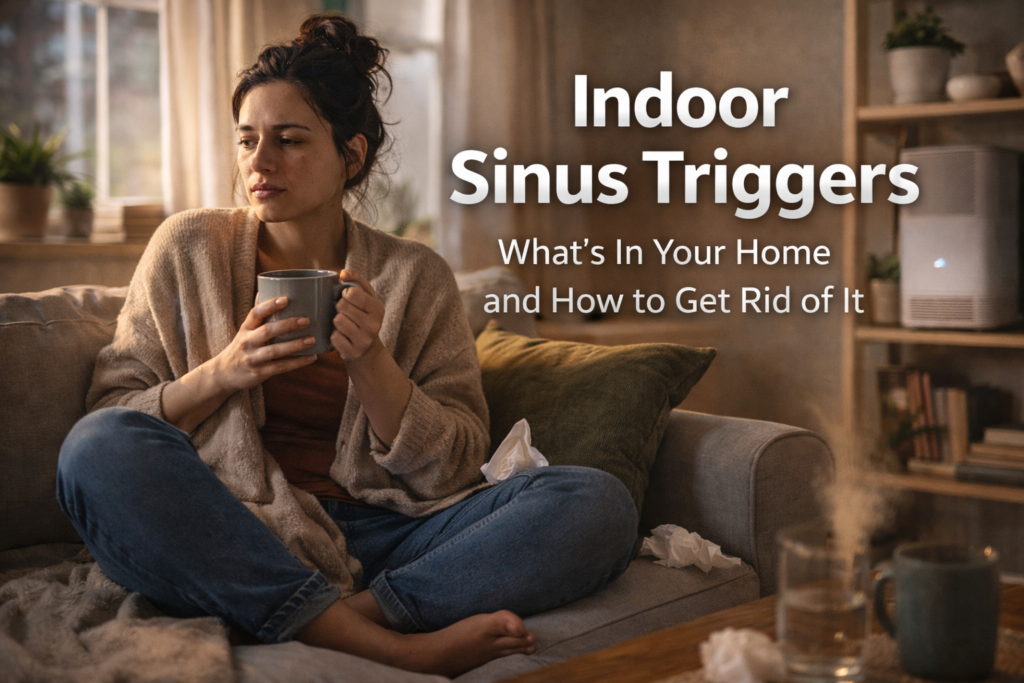
If you answered yes to any of those, allergen exposure is almost certainly part of what is driving this. The full breakdown of what indoor allergens are actually doing to your sinuses is worth reading if you have never seriously audited your home environment.
Chronic Sinusitis
Chronic sinusitis and post nasal drip are deeply connected. When the sinus lining is in a state of persistent inflammation, it produces excess mucus constantly. The swollen passages also impair drainage, so that excess mucus has fewer pathways to move through.
The result is mucus that accumulates, thickens, and drips backward into the throat in exactly the way that causes the classic post nasal drip sensation.

This is why treating the throat symptom without addressing the sinus inflammation never fully works. You can temporarily loosen the mucus, but if the inflammation driving overproduction is not addressed, the source just keeps running. Why chronic sinusitis keeps coming back is a question a lot of people with long-term post nasal drip will recognize, because the two are often the same underlying problem showing up in different ways.
Acid Reflux and Silent Reflux
This is the cause that genuinely surprises people.
Silent reflux, known medically as laryngopharyngeal reflux, sends stomach acid to the back of the throat without producing the classic heartburn feeling in your chest. That acid irritates the throat and nasal passages enough to trigger excess mucus production as a protective response, which feels exactly like post nasal drip. The broader causes and treatment approaches for acid reflux are covered in acid reflux causes and solutions.
Look for these signs that reflux might be your driver:
- Symptoms are consistently worse in the morning or after meals
- Certain foods make it worse — tomatoes, caffeine, citrus, spicy food, alcohol
- You feel like something is permanently stuck at the back of your throat
- No sinus treatment has ever produced real improvement
Treating sinusitis when reflux is the actual cause will produce nothing but confusion. The sinus treatment is addressing the response, not the source.
Dry Air and Environmental Irritants
Dry air causes the nasal lining to compensate by producing more mucus. Cold air does the same thing. Strong chemical smells, cleaning products, cigarette smoke, and perfumes all irritate the nasal lining directly and trigger overproduction even without any allergic mechanism involved.
This is why post nasal drip so often spikes in winter when heating strips all the moisture from indoor air, and why people who work in certain office environments notice a predictable flare every day they are there.
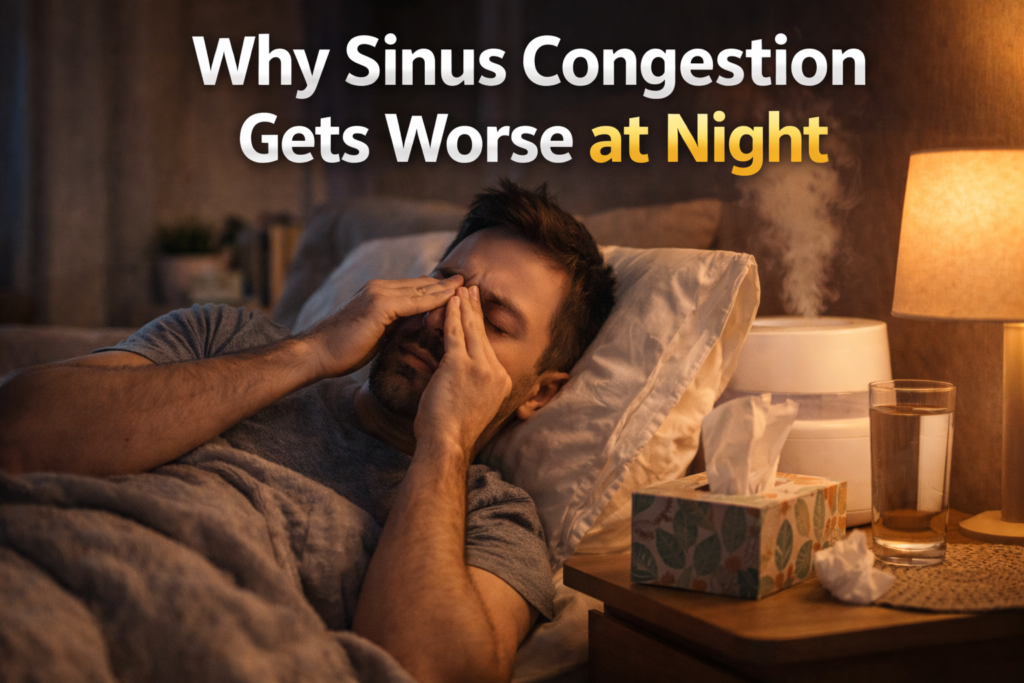
The reasons sinus symptoms get so much worse overnight cover the humidity and air quality side of this in depth, and almost everything there applies directly to post nasal drip as well.
Medications You Might Not Have Connected
Some of the most commonly used medications have mucus-related side effects people rarely connect to their throat symptoms.
First-generation antihistamines like Benadryl dry out mucus, which sounds helpful but actually makes it thicker and slower-moving. Thicker mucus drains worse, pools more, and produces a more noticeable post nasal drip sensation even as the total volume decreases.
ACE inhibitor blood pressure medications cause a chronic cough in a significant percentage of people who take them. It is mechanically different from post nasal drip but is frequently mistaken for it.
If you started a new medication around the time your symptoms began, that timeline is worth mentioning specifically to your doctor.

Why Post Nasal Drip Gets So Much Worse at Night
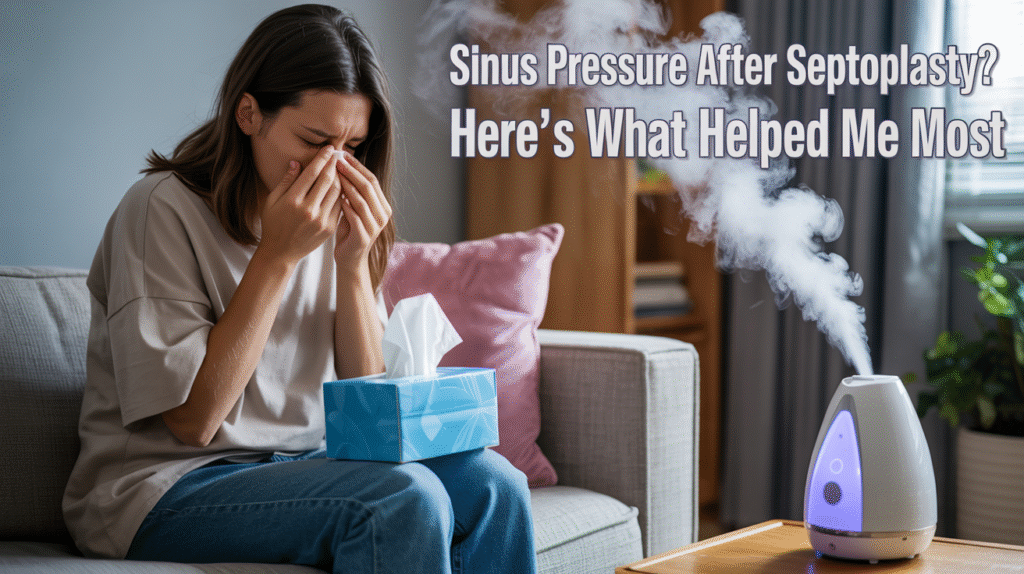
If there is one universal experience among post nasal drip sufferers it is this: the moment you lie down, everything gets dramatically worse. The cough starts. The throat clearing intensifies. Sleep becomes nearly impossible on bad nights.
Here is exactly why it happens.
When you are upright during the day, gravity helps mucus drain downward and forward. You swallow constantly without noticing and most of it clears. The moment you go horizontal, that drainage angle changes completely.
Mucus that was flowing now pools at the back of the throat where it cannot easily be swallowed. Your airway responds with a cough reflex. The coughing irritates the already-sensitive throat lining, which triggers more mucus production, which creates more pooling, which continues the cycle all night.
The single most immediate intervention for this is head elevation. Keeping your upper body raised enough to allow some gravitational drainage changes the geometry enough to make a real difference in how much you cough overnight. Even a few extra inches from a wedge pillow is enough to feel it.
The Throat Clearing Trap Nobody Tells You About
This one makes a real difference once you know it.
Constant throat clearing actually makes post nasal drip worse. The sharp, forceful motion irritates the throat lining and signals it to produce more protective mucus. So you clear, you get more mucus, you clear again, you get more mucus.
The cycle is completely self-reinforcing and a lot of people have been stuck in it for years without realizing the behavior they are using to cope is part of what is sustaining the problem.
Swallowing instead of clearing, when you can manage it, is easier on the throat lining. Sipping water frequently keeps the throat moist and makes swallowing easier. It is not a cure, but it genuinely interrupts the clearing cycle enough to reduce overall inflammation over time.


What Actually Works
The solutions that produce real improvement address what is causing the overproduction while also making existing drainage more manageable. Here is what consistently works when done properly.
Nasal Saline Irrigation
If there is one intervention with the most consistent evidence behind it, it is nasal saline irrigation done properly and regularly.
A good rinse physically removes excess mucus, allergens, and inflammatory debris. It reduces the inflammatory load on the nasal lining. It helps restore normal ciliary function so the drainage system starts working efficiently again.
The key word is properly. A gentle squeeze bottle rinses the front of the nasal passages. An electric sinus rinse machine with adjustable pressure reaches further into the sinus cavities where mucus is actually accumulating and does a significantly more thorough job. Readers considering a powered option can compare this powered sinus rinse machine with the rinse method described above.
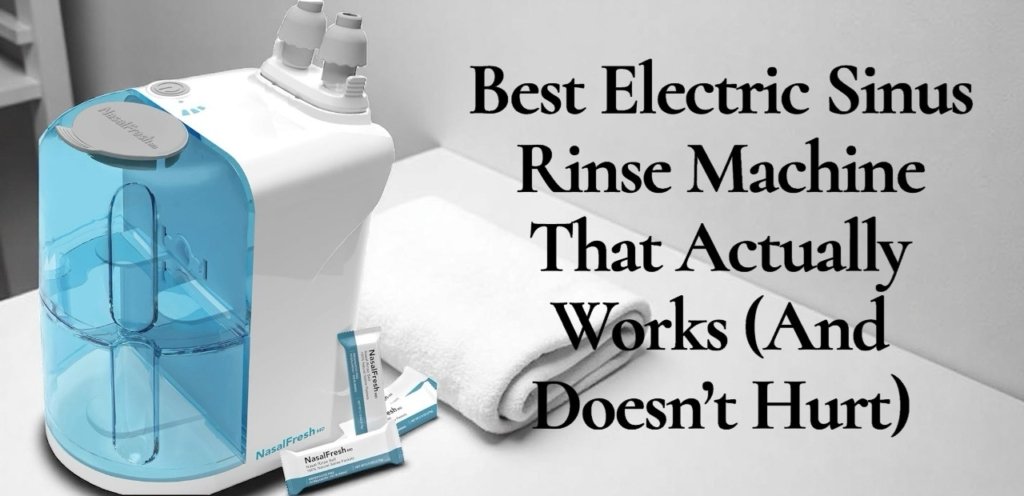
For chronic post nasal drip specifically, the thoroughness matters because you are trying to clear mucus that has already thickened and backed up. The electric rinse machines that actually work without causing pain are worth knowing about if you have avoided irrigation because older methods were uncomfortable, and how a cordless system compares to a traditional neti pot makes the case clearly for why the upgrade matters for daily use.
Hydration — More Than You Think You Need
Mucus viscosity is directly controlled by how hydrated you are.
Well-hydrated mucus is thin and mobile. Dehydrated mucus is thick, sticky, and slow-moving. That thick version is what accumulates at the back of your throat and produces the worst post nasal drip sensation, and it is also what forms the worst overnight buildup.

Staying genuinely hydrated throughout the day, not just drinking when you feel thirsty, is one of the simplest ways to keep mucus thin enough to drain rather than pool. How hydration directly affects sinus drainage goes deeper on this because the mechanism is more consequential than most people give it credit for.
Managing Your Bedroom Air Quality
Your bedroom environment is where most of the damage happens, because it is where you spend the most continuous hours with the least airflow.
Three changes make the biggest difference:
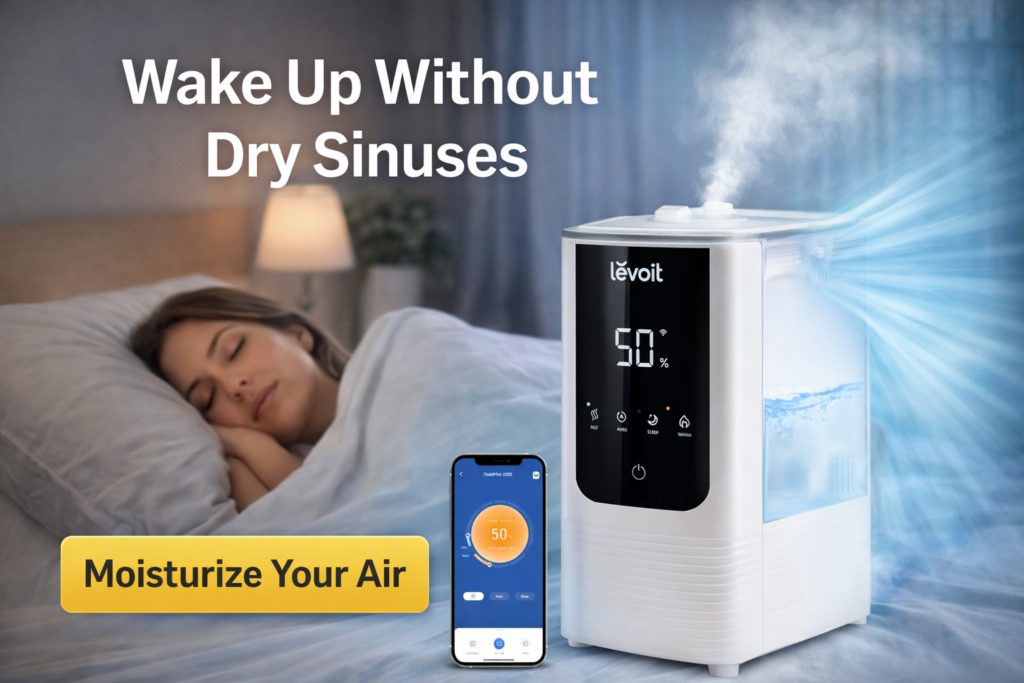
- A humidifier keeping humidity at 40 to 50 percent — reduces the dry-air mucus overproduction that drives a significant portion of post nasal drip, especially in winter. A smart humidifier with auto humidity sensing handles this without overshooting into the range that creates mold and dust mite problems.
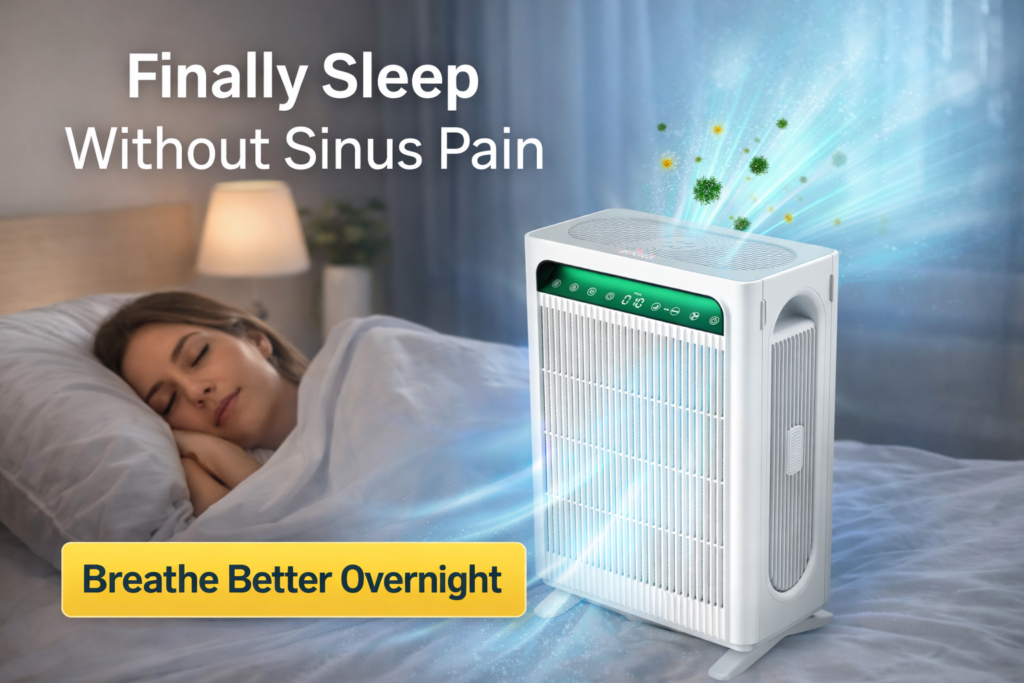
- A HEPA air purifier running overnight — reduces the allergen load you are breathing all night so the nasal lining has less to react to. A HEPA purifier built for real room coverage is one of the higher-impact purchases for this specific problem.
- Allergen-barrier mattress and pillow covers — creates a physical barrier between you and the dust mite population in your bedding, which is one of the most common hidden drivers of chronic overnight post nasal drip. The allergen-barrier bedding that actually makes a difference is worth checking out if mornings are consistently your worst time.

If you want to know what is actually in your indoor air before buying anything, an air quality monitor gives you real data instead of guessing.
Nasal Steroid Sprays
Over-the-counter nasal steroid sprays like fluticasone are the most evidence-backed pharmaceutical approach to post nasal drip driven by allergic inflammation or chronic sinusitis.
They work directly in the nasal lining to reduce the swelling and inflammatory response that causes excess mucus production. The important thing most people miss is that they work slowly. Two to four weeks of consistent daily use is the realistic timeline before you see meaningful improvement. Most people quit after a few days because nothing seems to be happening.
Used consistently for the full period, they produce real reduction in mucus overproduction for a lot of people. Do not judge them in the first week.
Steam When You Need Fast Relief
Steam loosens thick mucus and provides a genuine window of drainage relief for the worst moments.
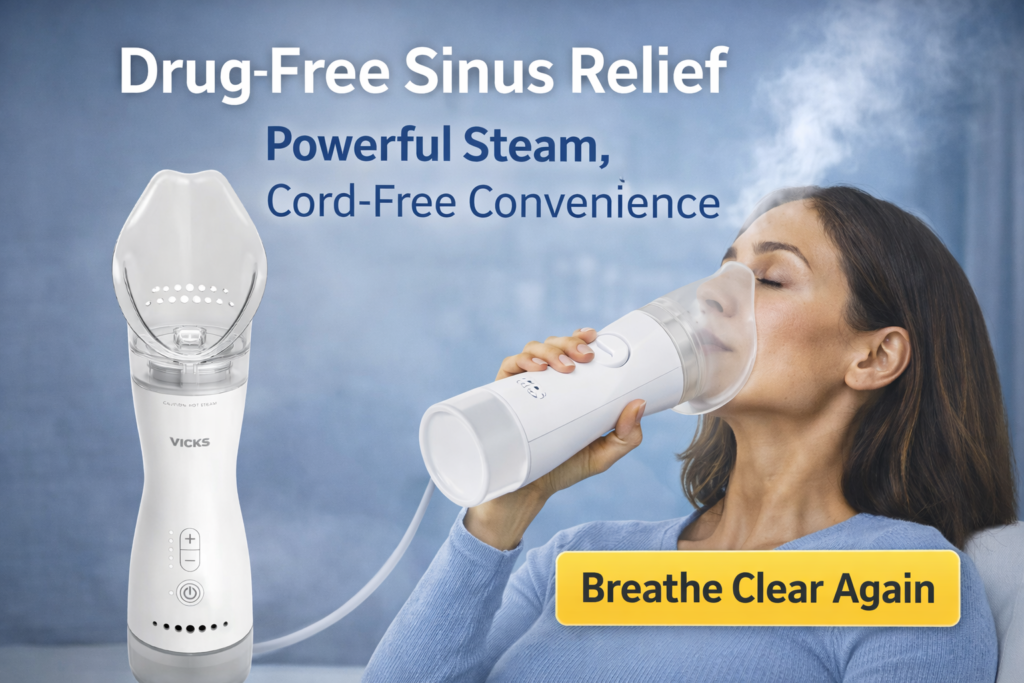
A hot shower before bed is the free and easy version. For targeted relief at any time of day, a portable steam inhaler delivers a concentrated session in ten minutes that loosens accumulated thick mucus enough to allow it to drain rather than sit. The Vicks portable steam inhaler is a practical option, and eucalyptus shower steamers extend the benefit of the evening shower with compounds that actively help open the nasal passages.
The Ear and Dizziness Connection Most People Miss
This is where a lot of people have a moment of recognition, because this connection rarely gets explained clearly anywhere.
The Eustachian tubes connect your nasal passages directly to your middle ears. When those tubes are partially blocked by the same swelling and mucus causing your post nasal drip, pressure stops equalizing properly between the middle ear and the outside world.
The results:
- That clicking or popping sensation that never fully resolves
- A feeling of muffled hearing on one or both sides
- A vague dizziness or off-balance sensation that is hard to describe but very real

Why your ears click constantly but never feel open and why sinus problems cause that non-spinning dizziness both connect directly to this, and they are worth reading if ear symptoms have been part of your experience alongside the throat drainage.
The practical takeaway is this: people who successfully reduce their sinus inflammation often report that their ear pressure and clicking improves at the same time, without specifically treating the ears. Because the root cause is shared.

Common Mistakes That Keep It Going
There are a handful of things people do when dealing with post nasal drip that either maintain the cycle or actively make it worse.
Taking antihistamines without understanding what they do. First-generation antihistamines dry out mucus. Drier mucus is thicker mucus, and thicker mucus moves more slowly and pools more easily. The total volume might decrease but the sensation of post nasal drip often gets worse, not better.
Letting dehydration build through the day. Most people drink far less water than their mucus viscosity requires. By mid-afternoon, mild chronic dehydration has already thickened mucus enough to worsen drainage, and by bedtime the overnight pooling starts from a worse baseline than it needed to.
Treating post nasal drip as isolated from everything else. Post nasal drip is almost always a downstream symptom of something happening upstream in the sinus system. Treating the throat sensation without looking upstream means the source keeps running. Why some people feel like they permanently have a cold covers the bigger upstream picture that most chronic post nasal drip sufferers are actually dealing with.
When to See a Doctor
Most post nasal drip responds to the approaches above when applied consistently over several weeks. But these are the situations where professional evaluation is the right move rather than continued home management:
- Symptoms have lasted more than three months without meaningful improvement
- Significant facial pain and pressure alongside the throat drainage
- Recurring episodes that feel like infection — fever, colored discharge, feeling genuinely unwell
- Noticeably reduced sense of smell
- Difficulty swallowing that goes beyond the discomfort of post nasal drip
- Blood in the mucus
- Symptoms that are one-sided and progressively getting worse
If reflux is suspected, a gastroenterologist is the right specialist. Silent reflux looks exactly like a sinus problem and will not improve with any sinus treatment if the acid exposure is not addressed directly.

The situation where a CT scan comes back normal but symptoms persist is a specific scenario worth understanding before your appointment, because knowing what those scans can and cannot show changes how you advocate for yourself in the room.

How Long Does It Actually Take to Get Better
One of the things that makes post nasal drip particularly demoralizing is that it does not resolve fast even when you are doing the right things.
Here is an honest timeline of what to expect:
- Saline irrigation twice daily — noticeable improvement in mucus quality and drainage within one to two weeks
- Humidifier and air quality changes in the bedroom — morning symptoms improve within about a week of consistent use
- Nasal steroid sprays — two to four weeks before meaningful anti-inflammatory effect builds up
- Allergen-barrier bedding and HEPA filtration — gradual accumulation that becomes clearly noticeable after two to three weeks of continuous exposure reduction
The compound effect of all these changes together, maintained consistently, is where the real shift happens. Most people who finally get on top of chronic post nasal drip did not find one magic solution. They addressed multiple pieces of the puzzle at the same time, held the course for about a month, and watched the baseline slowly move to somewhere they could actually live with.
That is not the exciting answer. But it is the honest one, and it is far more useful than the next article telling you to try ginger and honey.
Written by Sandra Okafor. Sandra spent several years working as a respiratory therapist before leaving clinical practice. She now manages her own chronic sinusitis and post nasal drip at home and writes about upper respiratory health from a perspective that combines clinical understanding with real daily experience. She is not providing medical advice, and she always recommends speaking with a doctor for persistent or worsening symptoms.