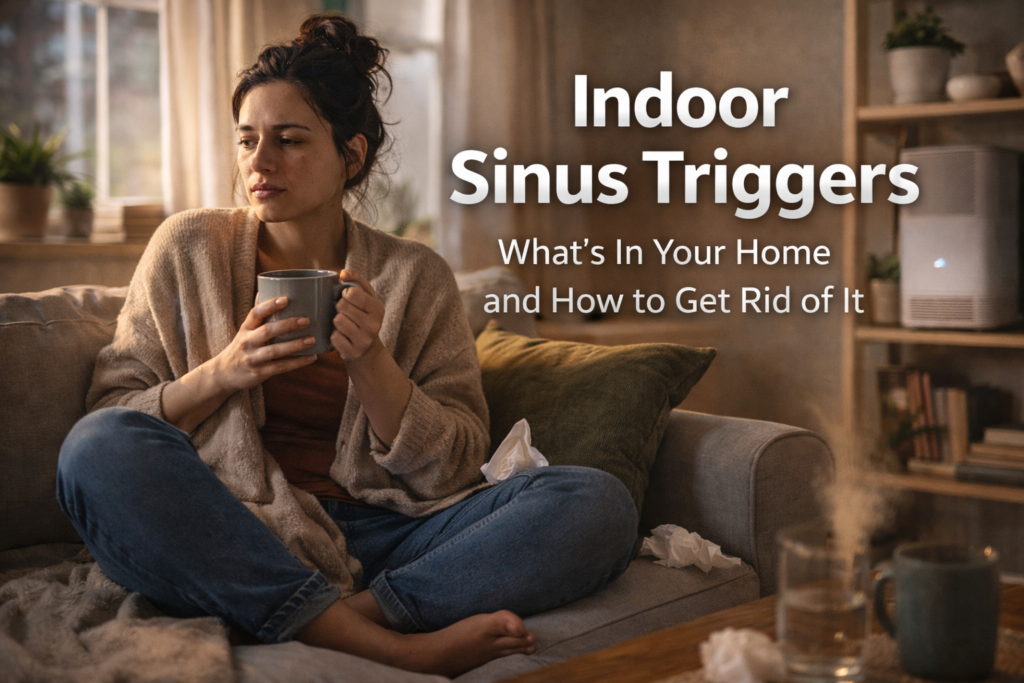
Your home might be the reason your sinuses never fully settle down. Here’s what’s actually in your indoor air — and the specific changes that make the biggest difference.
My name is Rachel, and for almost three years I was convinced I was just someone who got sick a lot.
Every few weeks, like clockwork, the pressure behind my cheekbones would build up until my whole face felt like it was being squeezed from the inside. My nose would alternate between blocked solid and running constantly. I’d wake up in the morning feeling like I’d spent the night breathing through a wet sock. My doctor treated each episode as a separate sinus infection, gave me antibiotics, and sent me home. They worked — for a while. Then the whole cycle started again. The explanation of why sinus pressure keeps returning can help make sense of why temporary treatment may not stop this cycle.
It wasn’t until I moved apartments and the symptoms nearly vanished within two weeks that it hit me: it wasn’t bad luck. It wasn’t a weak immune system. It was my home. The old apartment had a humidity problem I’d never properly addressed, carpet throughout that hadn’t been deep-cleaned in years, and a bedroom that faced a busy street where I slept with the window cracked every night. I was living inside a sinus trigger factory and wondering why I couldn’t get better.
I’ve spent the time since then going deep on what actually lives in our indoor environments and what it does to sinus tissue — partly because I’m obsessed with not going back to feeling that way, and partly because once you understand it, you can’t un-see it. This article is everything I know, laid out practically, so you can figure out what’s actually going on in your home and what to actually do about it.
Why Your Home Can Be Worse for Your Sinuses Than Outdoors
Most people assume outdoor air is the problem — pollen seasons, pollution, cold air. And those things do matter. But indoor air quality is often significantly worse than outdoor air quality, and because the average person spends around 90 percent of their time indoors, the indoor environment has a disproportionate impact on chronic sinus health.
The reason indoor air gets so concentrated with irritants is simple: it doesn’t move much. Outdoor air is constantly diluted by wind and weather. Indoor air recirculates through the same space, picking up particles from carpets, furniture, bedding, pets, cooking, cleaning products, and building materials, with no real mechanism to flush them out unless you actively create one. What accumulates over days and weeks in a closed home environment is genuinely remarkable — and most of it is invisible, which is why most people have no idea it’s there.
The sinuses, for their part, are the body’s primary air filtration system. Their job is to trap and neutralize exactly the kind of particles that accumulate in indoor air. When the load is manageable, they do it efficiently. When the load is chronic and high — as it is in many homes — the tissue becomes chronically inflamed, drainage gets impaired, and what you feel is that endless cycle of pressure, congestion, and never quite feeling right that feels exactly like having a cold every single day that never goes away.

The Six Biggest Indoor Sinus Triggers
1. Dust Mites
If there’s one indoor trigger that I wish someone had explained to me properly years earlier, it’s this one. Dust mites are microscopic arachnids — related to spiders, if that helps you take them more seriously — that live in mattresses, pillows, upholstered furniture, carpets, and stuffed animals. They feed on the dead skin cells that humans shed constantly, which means anywhere a person spends time regularly is a dust mite habitat.
A single mattress can house hundreds of thousands of dust mites. That number is not an exaggeration and it’s not meant to be alarmist — it’s just the reality of how these organisms live alongside us. The problem isn’t the mites themselves but their waste particles, which become airborne, get inhaled, and trigger an immune response in the nasal passages of anyone who has a sensitivity to them. Dust mite allergy is one of the most prevalent allergen sensitivities in the world, and a huge proportion of people who have it don’t know it because the symptoms — chronic nasal congestion, sneezing, post-nasal drip — look almost identical to a permanent mild cold.
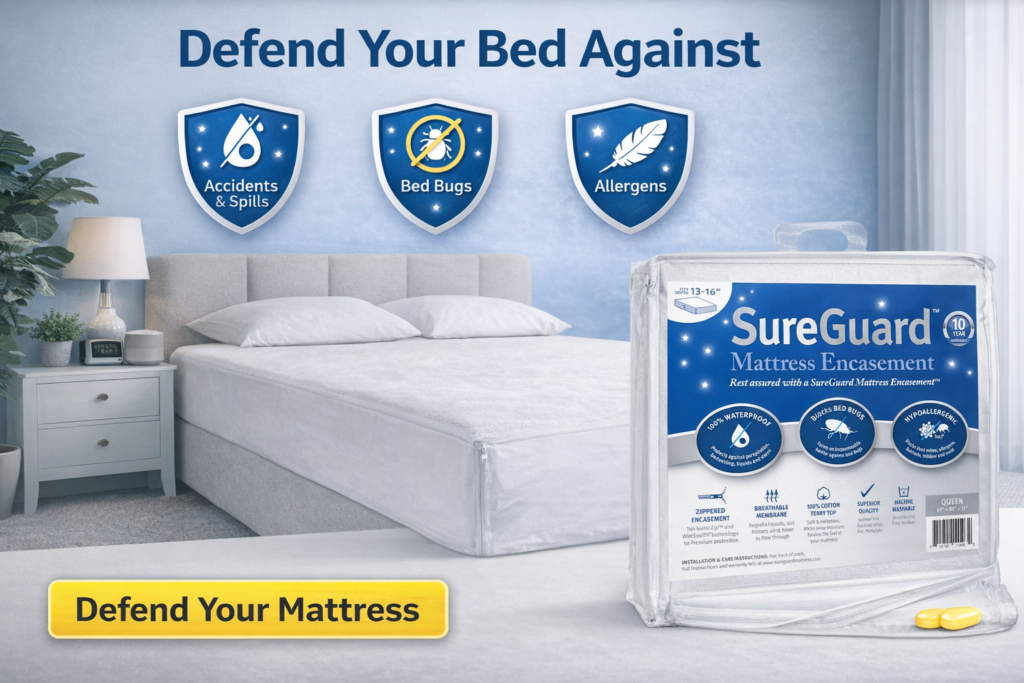
The bedroom is the highest-risk room because it’s where you spend the most continuous hours, and your bedding is ground zero. Mattress and pillow encasements that create a physical barrier between you and the dust mite population — tightly woven covers that mites can’t pass through — are the most direct intervention. The SureGuard mattress and pillow encasements are what I use personally, and the change in my morning symptoms after switching was noticeable within the first week. Washing your bedding weekly in hot water (above 130°F) kills mites in the bedding itself but doesn’t address the mattress — which is why the encasement matters more than washing frequency alone.
2. Mold and Mold Spores
Mold doesn’t need a visible water leak to be a problem. It grows wherever moisture accumulates consistently — inside walls near plumbing, in bathroom grout, under sinks, around window frames, in basements and crawl spaces, and inside HVAC systems. You can have a meaningful mold spore load in your home without ever seeing visible mold growth, because the colonies are often behind surfaces or in areas with poor airflow.

When mold spores are inhaled, they trigger an inflammatory response in the nasal passages and sinuses that is functionally indistinguishable from other allergic reactions — congestion, pressure, sneezing, post-nasal drip. For people with mold sensitivity, even low-level chronic exposure is enough to keep their sinuses in a state of constant low-grade inflammation that never fully resolves because the trigger is never removed. When that inflammation is paired with clicking or shifting pressure in the ears, why sinus pressure can affect your ears offers a useful explanation of the pattern.
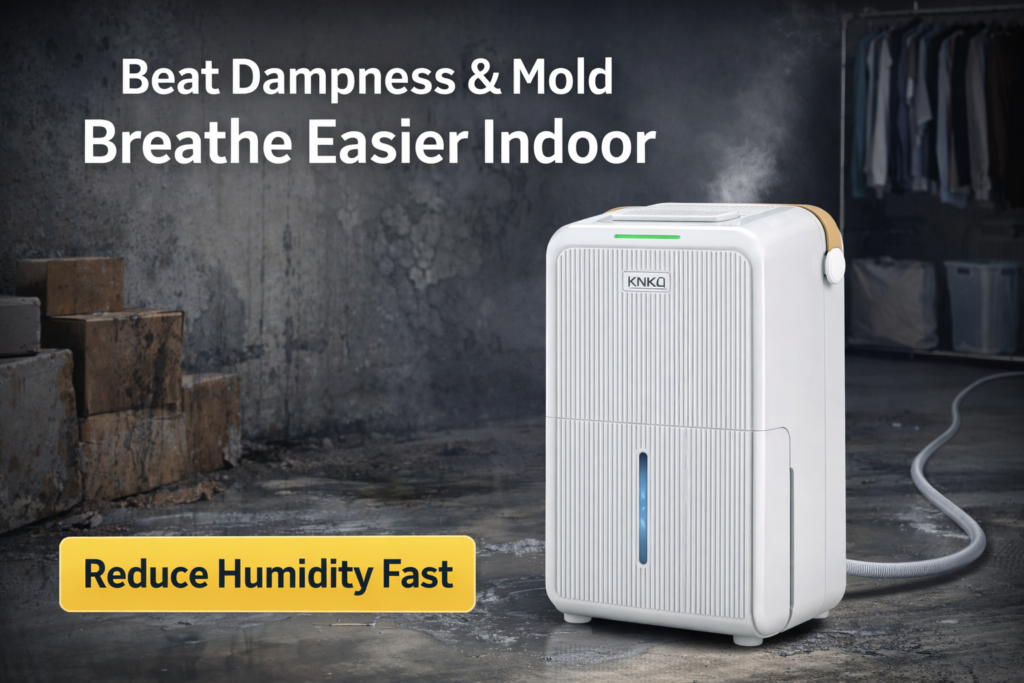
Controlling indoor humidity is the most effective way to limit mold growth, because mold cannot thrive when relative humidity stays consistently below 50 percent. If you have a basement, a bathroom without proper ventilation, or a climate that’s humid year-round, a dehumidifier is a genuinely useful tool rather than a luxury. The connection between household humidity and persistent sinus problems is something I didn’t understand until I started tracking it, and for a lot of people it’s the hidden variable that’s been driving their symptoms all along. When I finally got my old apartment’s basement humidity under control — a KNKA dehumidifier running continuously — the musty smell disappeared within days. Which told me everything I needed to know about what had been in the air.
3. Pet Dander
Pet dander is not pet hair. This distinction matters because a lot of people think that having a short-haired pet, or keeping the pet out of the bedroom, is sufficient to manage pet dander exposure. It isn’t, and understanding why requires knowing what dander actually is.
Dander is microscopic flakes of skin shed by animals with fur or feathers, along with proteins from their saliva and urine that dry and become airborne. These particles are extremely small — small enough to stay airborne for hours after an animal has left a room — and extremely sticky, meaning they attach to furniture, walls, clothing, and carpet and remain there for months even after the animal is removed from the environment entirely. If you have a cat and you’ve noticed your sinus symptoms persist even when you’re away from home for a few days, the dander you’ve been carrying on your clothes is part of the reason.
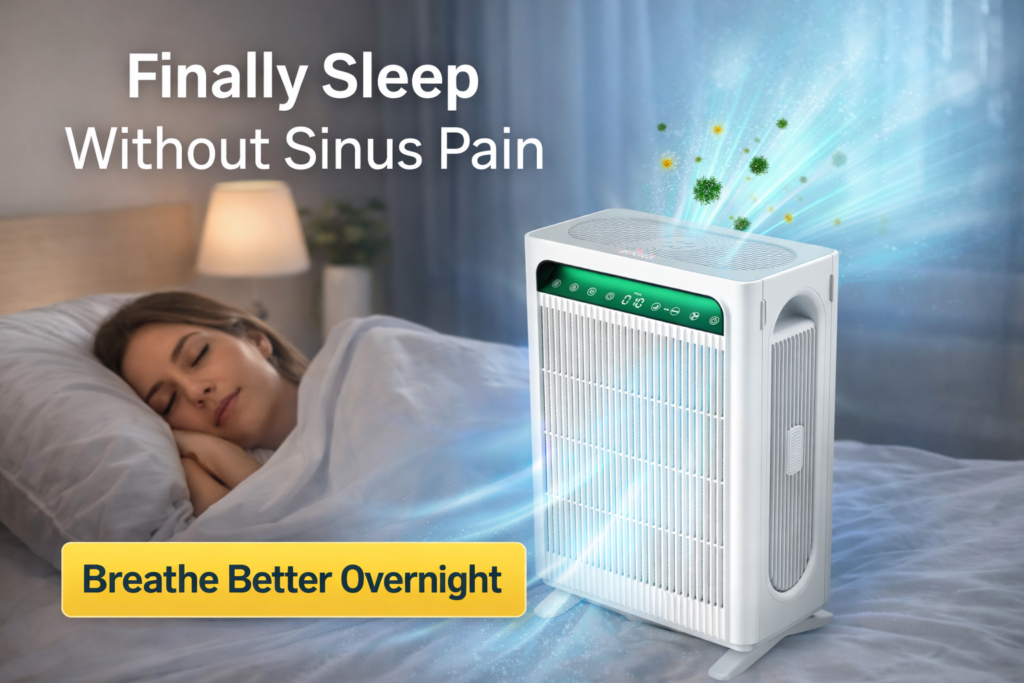
Living with a pet and managing sinus symptoms isn’t impossible, but it requires a serious commitment to air filtration. A HEPA air purifier running in the rooms where the pet spends the most time — and especially in the bedroom if the pet is allowed there — captures the dander particles before they accumulate and get inhaled. A quality HEPA air purifier built for larger room coverage makes a meaningful dent in airborne dander load, and in my experience it’s the single highest-impact purchase for households with pets where one person has sinus sensitivity.
4. Dust and Particulate Matter
General household dust is a mixture of dead skin cells, fabric fibers, soil tracked in from outside, insulation particles, and whatever else is physically present in a home environment. It settles on surfaces when air is still and becomes airborne again whenever those surfaces are disturbed — vacuuming, walking on carpet, pulling out a couch cushion, running a fan. In a home with carpet throughout, the carpet acts as a reservoir that constantly re-releases particles into the air with any foot traffic. For a broader explanation of why dust keeps returning and which home changes can reduce it, see household dust causes and fixes.
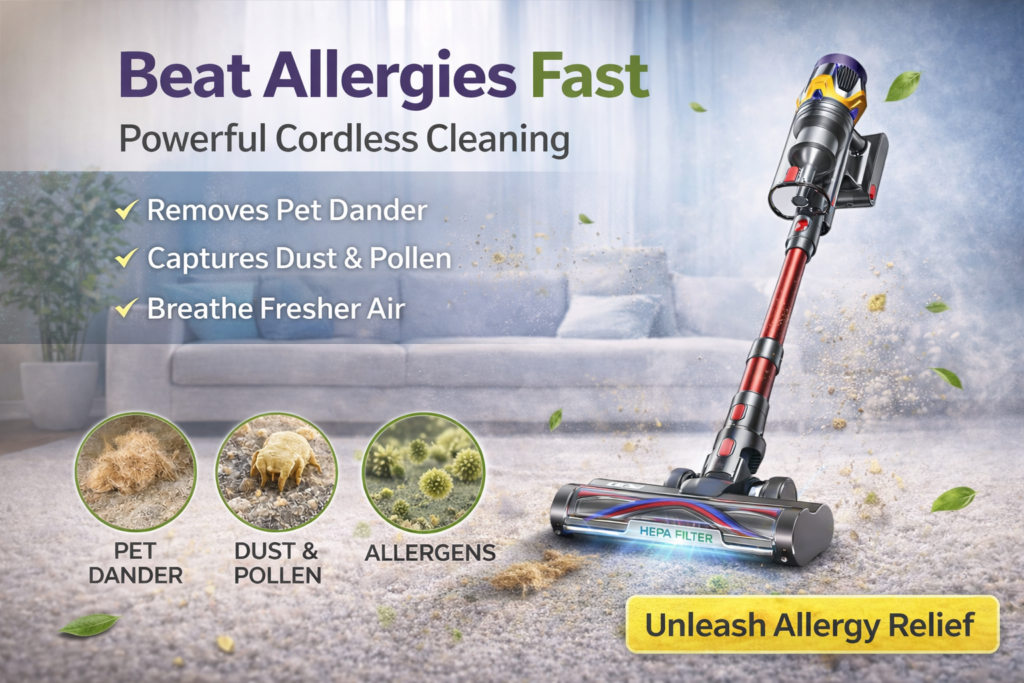
Regular vacuuming with a vacuum that has proper filtration — one that doesn’t just pick up debris and then exhaust fine particles back into the air — makes a consistent difference. The cordless vacuum discussed here has been part of my weekly routine since I started taking the indoor air quality issue seriously, and vacuuming twice a week versus once a month genuinely changes what ends up in the air by the end of the week. Hard floors are easier to keep clear than carpet for this reason — dust on a hard floor gets swept or vacuumed and stays gone rather than being stored in carpet fibers and re-aerosolized with every step.
5. Volatile Organic Compounds (VOCs)
This one surprises people. VOCs are gases emitted by a wide range of common household products — paints, varnishes, cleaning products, air fresheners, scented candles, new furniture and flooring, adhesives, and dry-cleaned clothing. They’re not allergens in the traditional sense, but they’re irritants that cause direct inflammation of the mucous membranes in your nose and sinuses, and in sufficient concentrations they can trigger or worsen sinus symptoms even in people who have no allergic sensitivities at all.
The irony I always think about is that many people dealing with sinus problems reach for air fresheners or strongly scented cleaning products to make their home feel cleaner, when those products are themselves adding to the VOC load in the air and making sinus inflammation worse. Fragrance-free or minimally fragranced cleaning products, adequate ventilation when painting or using adhesives, and letting new furniture off-gas in a well-ventilated space before moving it into a bedroom all reduce VOC exposure meaningfully.
6. Pollen — Even Indoors
Most people think of pollen as an outdoor problem, and it is — but it doesn’t stay outside. Pollen travels on clothing, on pets, through open windows and doors, and through HVAC systems that draw in outdoor air. During high-pollen seasons, indoor pollen levels in homes without filtration can be meaningful enough to trigger symptoms in people with pollen sensitivities, even if they’ve been inside all day.
Keeping windows closed during peak pollen hours in spring and summer — typically mid-morning through afternoon — and running air conditioning rather than natural ventilation on high-pollen days is the primary behavioral intervention. Air filtration in the bedroom captures what does get in. Showering and changing clothes after spending time outside during high-pollen periods prevents you from carrying the pollen directly into your bed, which is the highest-exposure position.

How to Actually Find Out What’s Triggering Your Sinuses
One of the most useful things I did when I started taking this seriously was stop guessing and start measuring. I’d been making assumptions about what was in my home environment with no actual data, which meant I was making changes that felt productive but might not have been targeting the right variables.
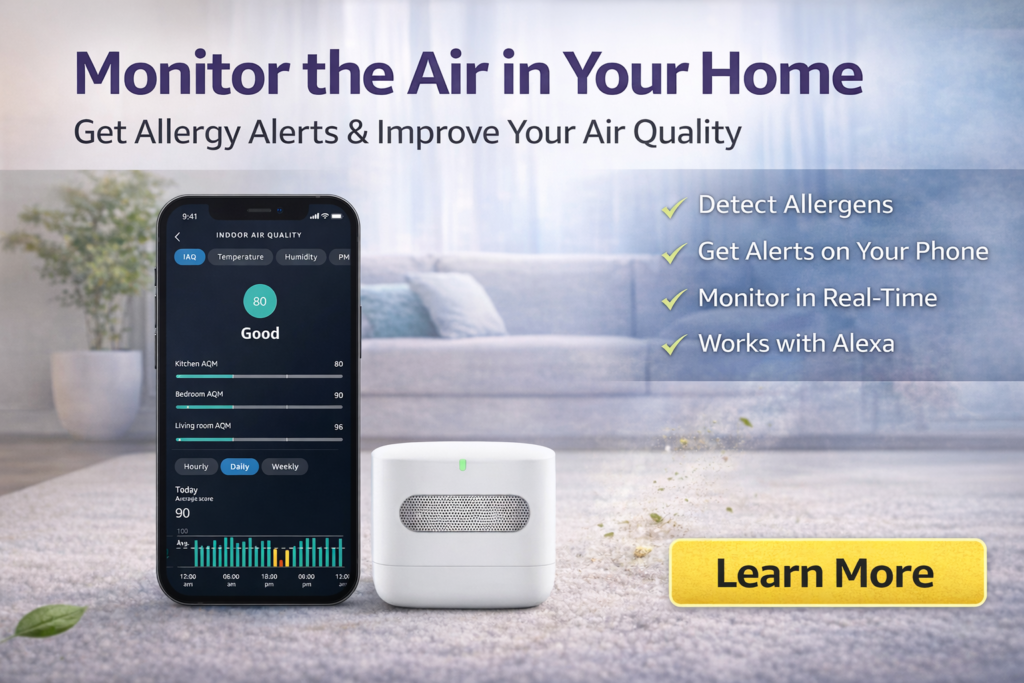
An indoor air quality monitor gives you real-time data on particulate matter levels, humidity, temperature, and in more advanced models, VOC concentration. When I first plugged one in and watched the particulate reading spike every time I vacuumed with my old vacuum — the one that was apparently exhausting fine dust back into the air — it was the clearest possible illustration of why changing the vacuum mattered. Seeing what’s actually in your air turns an abstract problem into a concrete one you can actually track and address, and it lets you see whether the changes you’re making are working rather than just hoping they are.
Formal allergy testing through an allergist is the other piece I’d recommend for anyone who’s been dealing with chronic sinus symptoms without clear answers. A skin prick test or blood test identifies exactly which allergens your immune system is reacting to — dust mites, specific molds, specific animal danders, specific pollens — which removes the guesswork from what to prioritize in your home environment. Many people discover allergies they didn’t know they had, particularly to dust mites and mold, that have been driving their symptoms for years.
Building an Indoor Environment That Doesn’t Fight Your Sinuses
Once you know what you’re dealing with, the changes become a lot more targeted. Here’s how I think about layering the interventions — not as a checklist to do all at once, but as a priority order based on impact:
Start With the Bedroom — Always
Your bedroom is where you spend the most continuous hours in one position, breathing one air supply, with your face near one set of surfaces. If there’s one room in the house to get right first, it’s this one. Allergen-barrier encasements on the mattress and pillows, a HEPA air purifier running on auto, humidity in the 40–50 percent range, and weekly hot-water washing of bedding. Those four things alone change the nighttime environment significantly.
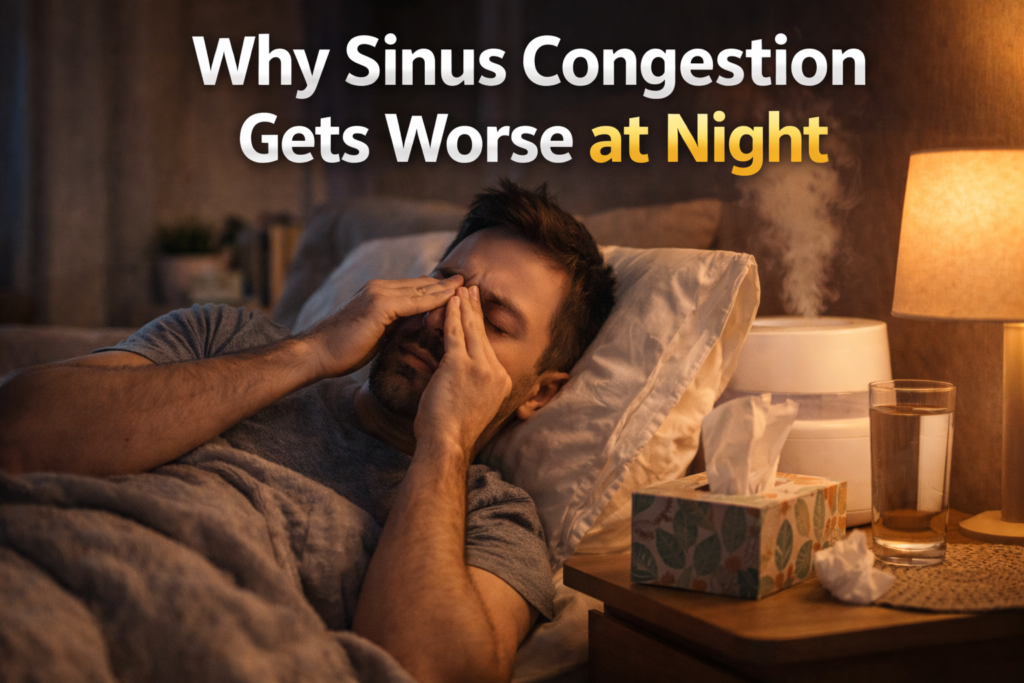
The difference between a bedroom with these changes and one without them shows up clearly in how you feel in the morning — whether you wake up stuffy and struggling or whether your sinuses have had eight hours of actual rest. That morning-worst pattern where you feel worst right after waking up and improve as the day goes on is almost always a sign that the sleep environment is a major part of the problem. More on the full picture of nighttime sinus congestion — and why lying down makes everything worse — is in this dedicated breakdown of why sinus congestion gets worse at night.
Air Filtration Throughout the Living Space
The bedroom purifier handles your sleep hours. Extending that coverage to the main living areas handles your waking hours. A purifier sized appropriately for the room — not a small desktop unit struggling to clean a large living room — running continuously on a low setting makes a background difference that accumulates over time. HEPA filtration is the non-negotiable specification here: it’s the only filtration type with a standardized performance requirement, and it’s what separates a device that genuinely removes allergen-sized particles from one that just moves air around.
The KNKA air purifier with its AQI display is worth mentioning specifically because the real-time air quality readout is genuinely useful — you can see the number improve after it runs for an hour, and you can see it spike when something disturbs settled dust. That feedback loop makes it much easier to understand your environment and make decisions about ventilation and activity timing.
Humidity Control in Both Directions
The target is 40 to 50 percent relative humidity throughout the home. Below that, nasal passages dry out, mucus thickens, cilia slow down, and the whole sinus drainage system gets compromised. Above 50 percent, dust mites and mold thrive and the allergen load goes up. Both extremes make sinus symptoms worse through different mechanisms, which is why you need both a humidifier for dry conditions and a dehumidifier for damp ones — not necessarily both at once, but whichever your home actually needs. The same humidity range can also influence overnight comfort and sleep quality, as explained in how bedroom humidity affects sleep.
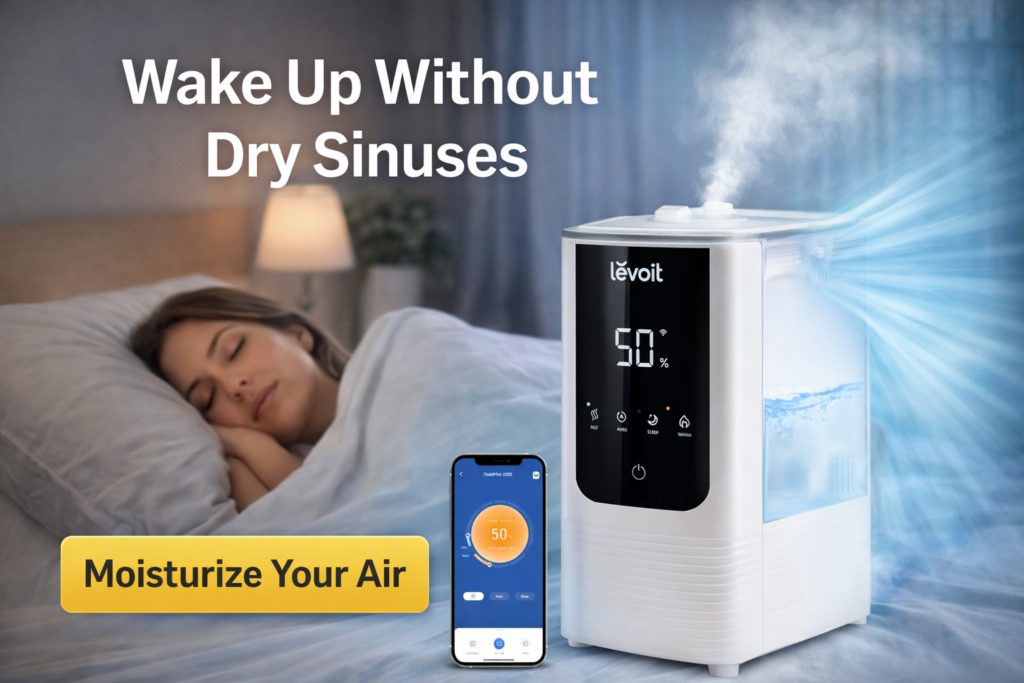
A humidity monitor tells you which side of that range you’re on. Most people in cold climates with heating systems are below 40 percent in winter. Most people in humid climates or with basement moisture issues are above 50 percent in summer. A smart humidifier with auto humidity sensing handles the dry-air problem without overshooting, and the dehumidifier with drain hose handles the damp-air problem without requiring you to empty a tank every day.
Reduce the Dust Reservoir
Carpet is a significant allergen reservoir and the hardest surface to truly clean. If you’re renting and can’t change the flooring, more frequent vacuuming with proper filtration and area rugs that can be washed make a difference. If you’re in a position to make flooring choices, hard floors throughout the bedroom and main living areas are meaningfully better for indoor air quality than wall-to-wall carpet. Every surface that doesn’t trap and store particulates is one less reservoir contributing to the airborne load.
Curtains, upholstered furniture, and throw pillows are also significant dust and allergen holders that often get overlooked. Washable curtains washed every few months, furniture covers that can be removed and laundered, and limiting the number of fabric surfaces in the bedroom specifically all reduce the overall reservoir from which particles get continuously re-released into the air.
Clean Smarter, Not Harder
The goal with cleaning is to remove allergens and particulates from the home rather than just redistributing them. Dry dusting with a feather duster does the latter — it moves dust into the air where you breathe it before it settles again. Damp dusting or using microfiber cloths that trap particles captures them rather than launching them. Vacuuming before mopping hard floors, rather than after, picks up the bulk of the debris before the mop redistributes fine particles. It’s a different mental model — cleaning as particle removal rather than surface appearance.

What About Air Fresheners and Scented Products?
I want to spend a moment on this because it’s a trap a lot of people with sinus problems fall into, myself included at one point. When your house smells musty or stale — which it will, if there’s a humidity or dust problem — the natural instinct is to make it smell better with candles, plug-in fresheners, or sprays. These products mask the smell while adding VOCs and fine fragrance particles to the air that directly irritate sinus tissue.
The right response to indoor air that smells off is to find and address the source — increase ventilation, reduce humidity, clean the hidden mold or mildew, wash the carpets. An air purifier with an activated carbon filter alongside its HEPA layer will also capture odor-causing compounds without adding new irritants. Fragrance-free and genuinely unscented cleaning products make a meaningful difference for sensitive sinuses — not just “free and clear” products that still contain fragrance maskers, but truly unscented formulations.
How Long Before You Notice a Difference?
This is the honest answer, based on my own experience and what I’ve seen others describe: some changes produce noticeable improvement within days, others take weeks, and the full picture of improvement can take a couple of months to understand properly.
The air purifier in the bedroom tends to produce the fastest noticeable result — many people notice they’re waking up less congested within the first week. The allergen-barrier bedding encasements are similar — within a week or two of removing direct nightly exposure to dust mites, morning symptoms often improve noticeably. Humidity changes tend to take a bit longer because the environment is adjusting gradually.
The changes that take the longest to show up are the ones that involve reducing deeply embedded allergen reservoirs — like decades of dust in old carpet, or mold that’s been growing inside walls. These take longer because the source is harder to eliminate, and sometimes professional remediation or a bigger environmental change is what’s actually needed.
The most useful thing I can tell you is to change one significant variable at a time if you want to understand what’s actually driving your symptoms, or to change everything at once if your primary goal is just to feel better as fast as possible. If you’re dealing with chronic sinusitis and want to understand the broader picture of what’s driving it beyond just the home environment, the full explanation of why chronic sinusitis keeps coming back covers the medical and structural side in detail alongside the environmental factors discussed here.
Frequently Asked Questions
Can my furniture be causing my sinus problems?
Yes, in a few different ways. Upholstered furniture accumulates dust mites and pet dander in the same way mattresses do. New furniture and flooring — particularly pressed wood products — emit formaldehyde and other VOCs for months after manufacturing. Old furniture in damp environments can harbor mold. If your symptoms are consistently worse in a specific room or after sitting in a specific chair, the furniture is worth investigating as a source.
My home looks and smells clean. Can it still be triggering my sinuses?
Absolutely, and this is one of the most important things to understand. The particles that trigger sinus problems are invisible — dust mites, mold spores, and fine particulate matter can’t be seen or smelled at the concentrations that affect sinus tissue. A home can look spotless and still have significant allergen loads in the bedding, in the carpet fibers, and in the air. This is exactly why measuring — with an air quality monitor and, ideally, allergy testing — gives you information that visual inspection can’t.
Does opening windows help or hurt?
It depends on the season and your specific triggers. On low-pollen, low-pollution days with moderate outdoor temperatures, opening windows and increasing fresh air ventilation genuinely improves indoor air quality by diluting accumulated indoor pollutants. During high-pollen seasons, on high-pollution days, or in very humid climates, opening windows can introduce outdoor allergens and humidity that make indoor air quality worse. Knowing what your triggers are helps you know which way to go.
Is it worth getting a professional air quality test?
For most people with sinus symptoms, a consumer-grade air quality monitor and allergy testing through an allergist covers the relevant ground without the cost of a professional assessment. Professional testing becomes more worthwhile when you suspect mold inside walls, when you’ve made all the common environmental changes without improvement, or when you’re dealing with an older home with potential lead, asbestos, or radon concerns.
How often should I replace HEPA filters in my air purifier?
Most manufacturers recommend every 6 to 12 months depending on usage and air quality conditions. In a home with pets or significant dust load, the filter may need replacement closer to the 6-month end of that range. A pre-filter that captures larger particles before they reach the HEPA filter extends the HEPA filter’s life and reduces ongoing costs — which is one of the features I specifically look for when evaluating purifiers.
Final Thoughts From Rachel
The three years I spent cycling through sinus infections and antibiotics before realizing my home was the problem taught me something I try to share with anyone in a similar loop: treating the symptoms without addressing the environment is like bailing out a boat without finding the leak. You can keep pace for a while, but you’re working so much harder than you need to be.
Your indoor environment is something you have real control over — more control than you have over outdoor pollution, pollen seasons, or your own immune system’s sensitivities. The changes aren’t always glamorous. Allergen-proof mattress covers and air purifiers running in the background are not exciting interventions. But they work, they compound over time, and they address the actual source of the problem rather than managing its effects.
If you’re coming at this from the angle of recovering from sinus surgery, the indoor environment matters even more in the short term — healing sinus tissue is significantly more vulnerable to irritants than healthy tissue, which is why the full septoplasty recovery guide covers the home environment as part of recovery, not just as a long-term consideration. And if nighttime is when your symptoms are worst, the more targeted breakdown of why sinus congestion gets worse at night will help you understand which of these environmental changes to prioritize for the sleep hours specifically.
Start with the bedroom. Measure what’s actually there. Make the changes in priority order. Give it a few weeks. The results, in my experience, are real.
— Rachel, Sinus Struggles